Quality sounds

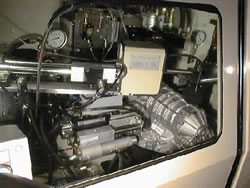
Making errors is an inevitable element of being human. Even the best-designed systems are unlikely to be error-free. In manufacturing practices, errors usually mean production of defective products resulting in increased cost and customer dissatisfaction. Quality controls, atomisation and multiple tests, are some of the preventive actions that are taken to avoid deficiencies. Listening attentively to a sound is a very common method for identifying whether something works properly. Driving a car constitutes a typical example. Drivers can understand the behaviour of the engine by listening to its noises. This empirical method, although subjective, can become an objective diagnostic tool when it is combined with scientific approaches and technological means. The German company MEDAV did just this, in order to assess the quality of products that include engines. They developed a system, named ANOVIS, which evaluates the quality by utilising the noise and vibration signals coming from the motor. The system consists of detectors and a PC that runs the signal analysis software. ANOVIS can be used in various phases of the production line. Every motor, while operating, vibrates and makes noises that are characteristic for its performance. To begin with, ANOVIS tests products that have been predefined as good or defective in order to educate the expert system, which is the core of the signal analysis software. Based on the experience gained from this training, the system sets a threshold that distinguishes the defective from the non-defective products. During the normal operation, the noise and vibration signals from the product under test are recorded and analysed. The expert system decides whether the product exceeds or not the threshold and characterises it accordingly. The system can also identify, in most cases, the precise problem with the product. The wide range of products which use motors, in combination with the demand for quality control, make ANOVIS applicable in many manufacturing sectors from vehicle manufacture to toys and from medical devices to civil engineering.