Improvements in veal production processes

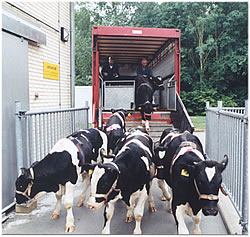
The European Union adopted regulations on the welfare of veal calves that set minimum standards to protect calves. An EC funded project aimed at identifying management strategies in the veal calf production chain within the scope of present and future regulations. These strategies would then both improve calf welfare and result in meat quality that meets market demands. The project’s research examined the consequences of various factors in the production chain in terms of welfare and meat quality. European directives regulate calf transportation in terms of journey length, structure, space allowances during transport, and feed, water and rest intervals. The project studied and scientifically assessed the legislation, and then determined the factors that affect calf welfare during transport. Calves are transported to rearing units and to slaughterhouses, and transport conditions could also affect veal meat quality. This project result aimed at highlighting factors that might affect calf welfare and meat quality during transportation. It also provided information on the suitability of present regulations and provided recommendations for regulation improvements. This project found that transportation stressed young calves, however the effect of stress decreased with journey duration. Also, increasing calf space allowances did not affect stability, lying or injury. A mid-journey lariage allowed calves to rest and get nutrient energy, yet lariage duration was not a significant factor. In addition, transportation did not affect subsequent growth. Transporting veal calves to a slaughterhouse caused stress compared to on-farm slaughter, however this did not negatively affect meat quality. In essence, this project’s results could provide information pertaining to calf welfare and meat quality for regulations on calf transport.