Improving solar cell technology

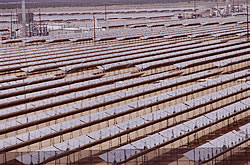
Fossil fuels and nuclear fuels, which are conventional energy sources, could have environmental drawbacks. Clean energy sources, including solar cells, may also become important for energy needs in the future. However, solar cells have problems in terms of how efficiently light is converted to electrical energy and fabrication costs. A European project examined the problems with solar cells and used developments in silicon bipolar technology for fabricating silicon solar cells. The polysilicon emitter was applied to silicon solar cells in order to improve efficiency. This project’s results showed that an efficiency of 15.3% was attained and solar cells’ series resistance was reduced. In fact, the Semiconductor Device Group examined the feasibility and performance of polysilicon emitter technology for crystalline silicon solar cells. As a result, this group designed a novel technology for solar cell fabrication. This technology is based on the utilisation of phosphorous doped amorphous SiC as emitter in conventional crystalline silicon solar cells. Also, amorphous SiC is utilised for the passivating layer of the back surface. In essence, this technology could improve solar cell fabrication.