Cleaning waste water with super particles

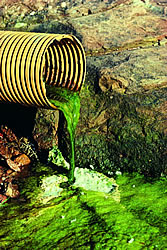
The steel, glass, ceramics and electricity industries all produce essential products for human consumption. However, they also generate large volumes of wastewater contaminated with heavy metals. Electricity generation is probably the largest, most widespread offender, yet who can live without electricity in the twenty-first century? Heavy metals such as lead, mercury and arsenic are toxic to humans. The main health effects concern the central nervous system. Wastewater must be cleaned of these metals before being returned to the water supply or re-used in the manufacturing process. These high profile industries are constantly looking to improve their waste treatment procedures as the standards imposed by governing authorities tighten. This is where innovative research funded by the European Commission can play a role. Scientists from the United Kingdom, Ireland and Germany combined their expertise to advance the state-of-the-art of superparamagnetic composite particles (SPMC). A new process was developed based on wet chemistry to create micron and sub-micron size SPMC embedded with iron oxide nano-particles that don't lose their magnetic properties in the presence of a magnetic field. Once introduced into the wastewater supply, these SPMC attract the in situ heavy metals. Following complexation, the laden SPMC are removed from the main flow. The heavy metals can then be detached from the SPMC by changing the local pH. Once separated, the heavy metals can be disposed of in the form of a highly concentrated sludge. Organisations with a more proactive environmental approach may even try to recover the metals through a variety of well-known techniques. The entire process was demonstrated in a controlled environment. The scientists seek additional support to commercialise the new SPMC, which can be applied to a number of different industries generating heavy metal contaminated wastewater. These highly advanced SPMC have the potential to clean wastewater at a lower cost than existing methods.