Advanced image processing with neural networks

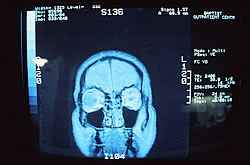
Human vision and perception are extremely difficult to imitate. Man's understanding of the biological, neurological, psychological and other factors involved is growing, but still limited. Fortunately, the increased processing power of today's computers and the digitisation of images into zeros and ones are helping to advance the state-of-the-art in image processing techniques. The AMOVIP project brought together researchers from three continents to examine the potential of neural network techniques in this field. Neural networks are highly sophisticated numerical methods, which are in this case applied to solve a set of differential equations. The result is improved discrimination between image foreground and background, object edges and brightness patterns. The approach involves three separate layers of analysis, interpolating between maximum and minimum values to establish a balanced solution. Considerable processing time is saved by limiting cell interaction to the local rather than global scale and by avoiding explicit comparison methods. Increased image quality in less time makes the AMOVIP results much more attractive than current image processing techniques. These results can be utilised in a wide range of applications. For example, biometric security measures require automated recognition of signature, facial, fingerprint and other personal characteristics. Image processing is also used for medical diagnosis, for instance with Magnetic Resonance Images. The method is easily implemented in VLSI (Very Large-Scale Integration) and is based in industry-standard technology (e.g. Matlab). Applications for patents have been submitted. The AMOVIP consortium seeks VLSI research groups and/or application-oriented partners.