Advanced aerospace NDT technologies enhance EU competitiveness

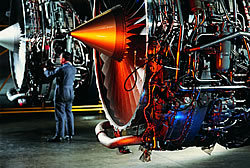
During aircraft component development, a series of NDT techniques have to be executed; and with the ever-increasing quality demands driven by increased life cycle designs, the impositions on NDT are crucial. Thus concurrent engineering processes now place greater importance on the integration of NDT throughout the entire manufacturing process, all the way from CAD design to full assembly. Within the NDT sphere of manufacturing, there are many different techniques, all of which are designed to test and measure various material and mechanical properties. The purpose of such techniques is to analyse structure and potential defect characteristics, so that critical flaws are exposed as soon as possible, and thus optimising safety, reliability and cost-effectiveness. The foundation step for the realisation of the advanced NDT concepts began with the successful coupling of NDT with other aerospace life cycle engineering disciplines. To ensure that these processes could work in harmony, various industrial objectives were established, which included the standardisation of the NDT workshop architecture and the provision of advanced software tools. These software tools were aimed at improving shared information with NDT and other sciences, increasing reliability and optimising inspections, and merging of the results of different inspection techniques for reduced waste. The technological and economical leading edge that this provides for, is realised with more powerful model based NDT techniques, automatic defect recognition and classification and greater competitiveness within the EU. The project therefore permuted two validation trials, whereby the first was a model validation by NDT, and the second was NDT validation by destructive testing. The combined results have now been prepared into a report that explains how advanced integrated aerospace manufacturing processes can optimise the inspection of surface flaws and interstitial defects; and hence increase competitiveness.