



New advances in Agri-Environmental management

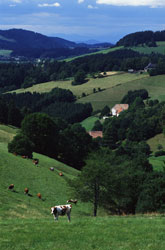
In an attempt to improve agricultural/environmental resources concerted efforts were made towards developing new innovative approaches that would be beneficial for both Agriculture and Environment. A mapping of practices applied on grazed grasslands for biodiversity benefit was performed with the aim to advance agri-environmental management. Systematic studies on plant species showed that no alterations were observed in grassland sites apart from those that were attributed to selective grazing. Comparison between breeds within the same species showed that little was the effect in biodiversity, however, an increase in patch size was detected at low stocking rates. The knowledge derived from these studies comprised structural details reflecting heterogeneity of grazed grasslands along with effects of breed and stocking rate on botanical diversity. The relevant information has been recorded and efforts have been directed towards the design and implementation of grassland agri-environmental schemes that would take advantage of similar studies. Development of a web-resident European database could serve as tool for strategic planning of grazed grasslands exploitation, increasing competitiveness to the benefit of the environment. Data from different countries could be utilized for optimization of current and design of new management practices that would ensure maintenance and enhancement of bio diverse grasslands. Predictability of agronomic outcomes will then be possible giving farmers and conservation managers the option to perform risk assessments employing prediction models and promoting environmental policy. The researchers wish to extend the geographical coverage involving partners skilled in agri-environmental issues and landscape ecology adding value to the community objectives for environmental protection and agriculture.