Measuring air quality on London's busy streets

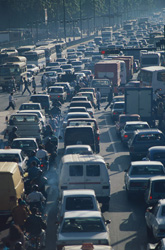
People often associate air pollution with large stationary sources like power plants. The truth is that our own automobiles are often worse culprits. Individual automobiles emit a relatively small amount of pollution, but this adds up when one considers the vast number of vehicles on our roads these days. Nowhere is this more apparent than congested roadways in large cities. Exceedances of the thresholds set for protecting human health are common at such sites. In addition to the impact of degraded air quality, citizens and businesses are also negatively affected by the time lost to commuting. The OSCAR project targeted the development of an expert system based on advanced modelling techniques to examine measures to mitigate the aforementioned negative impacts. In order to provide field data for model validation, scientists with the Atmospheric Science Research Group (ASRG) at the University of Hertfordshire, the OSCAR coordinator, carried out an extensive measurement campaign on the streets of London. Several different sampling sites were chosen so as to represent a variety of urban situations, including street canyons which are specific to large cities. The number, type and speeds of vehicles were recorded. Special equipment was employed to measure concentrations of the main atmospheric pollutants: nitrogen oxides, particulate matter, ozone, carbon monoxide, etc. Finally, basic meteorological data (wind speed and direction, temperature, pressure, etc.) was also collected to assist in the interpretation of the air quality and traffic data. The ASRG analysed the entire dataset, which was highly resolved in time and space. The results of this analysis were used to evaluate the expert system's component models, but can also be exploited by other members of the modelling community. Comparison of the situation in London with that of other major European cities is also a goal. It is hoped that this exercise will provide insight into reducing the negative impacts of traffic congestion.