Micro-robots getting ready to handle the nano-world

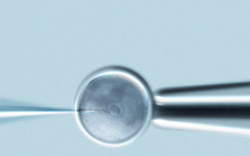
Imagine in a few years time a micro-robot capable of invading a cancerous cell, probing it at nanoscale, taking a picture using the latest developed CMOS (complimentary metal oxide semiconductor) camera and moving it around into it in order to heal it. The MICRON project brings us closer to this scenario by developing miniature robots able to handle micrometer-sized objects but also capable of dealing with the world between macro and micro, i.e. mesoscopic objects, with nanometer precision. The robots will be used mainly for handling cells and tissues in the field of nano-biology. Such a robot must be equipped with arms and legs in order to assemble, handle or cooperate with a microscope. Actuators are devices that transform input electric signals into motion and usually function based on the piezoelectric effect. The latter refers to the ability of some crystals to generate a voltage in response to applied mechanical stress. To drive the actuators mounted on the robots, the MICRON consortium has developed an intelligent interface technology based on 0.7 - micron mixed - mode CMOS technology. The base technology has been provided by the company AMIS. The resulting integrated circuit consists of five high voltage operational amplifiers, set up in an inverting loop configuration in order to reduce the total power consumption. The robot demands more than five actuators so at least two power addressing and amplification circuits have to be included on the electronics board. The partners have acquired immense expertise in terms of cooperation between robots and microscopes. However, regarding power integrated circuits for atomic force microscopes, they seek partners for collaboration and to continue the research.