European flora trait database

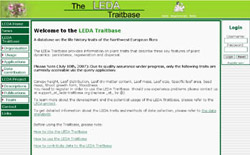
Tracking levels of biodiversity provides an important indicator of the health of an ecosystem. Biodiversity can be negatively affected by changes in land-use, climate, etc. Yet studying the evolution of the abundance and distribution of different species in time and space is a difficult task. The LEDA project consortium, led by the Landscape Ecology Group at the University of Oldenburg, sought to overcome this obstacle by creating the LEDA Traitbase. The LEDA Traitbase is a database available on the Internet that contains information about the flora of northwestern Europe. The Landscape Ecology Group constructed the LEDA Traitbase from disjointed national databases, previously unpublished research as well as new measurements. It contains 300000+ records for 32 different traits. The traits are relevant to the species' ability to survive threats such as habitat loss, namely their persistence, regeneration and dispersion characteristics. A relational database design was employed in order to enable data mining by LEDA Traitbase users. Species trait matrices can be generated for a variety of geographical scales. Several case studies performed by the LEDA consortium provide insight into the types of research that can be performed with the LEDA Traitbase. In order for the database to continue to grow following the conclusion of the LEDA project, the Landscape Ecology Group has encouraged e-networking among the academic community. Specific guidelines and protocols regarding the methods of data collection and the format for its submission were established. This ensures that the LEDA Traitbase will remain a valuable tool for biodiversity research well into the future.