Testate amoebae as indicators of climate change

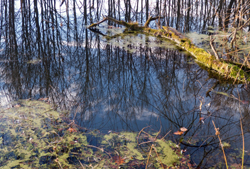
Europe's mires provide an excellent source of information on abrupt climate change, which can occur within a human lifetime. The ACCROTELM project employed the single-celled organism testate amoeba, which commonly occurs in mires, as a bio-indicator. Samples of fossil testate amoebae were used to reconstruct the past hydrology of mires from across northern Europe. The results were used to ascertain the depth to the water table over the Holocene period. This gave an indication of the amount of rainfall and evaporation of water that occurred during the mid to late Holocene. According to many scientists, the Holocene period is the geological epoch that continues to the present. The information collated by ACCROTELM was integrated with complementary data collected from mid-European lakes. This data was used to show the extent of climatic variability over the last 6,000 years and applied to climate models. More accurate and reliable climate models allow EU policy makers to make better informed decisions regarding strategies for economic development.