Fruit flies teach researchers about learning

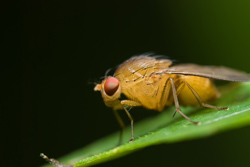
It is no surprise that researchers, laboratories and psychologists have been trying to understand learning and memory for centuries. The study of learning itself can be probed from many different angles, including at the deep cellular, genetic and biochemical levels. One way of examining learning and memory is to look at how neurons communicate with each other. The EU-funded 'Kv channels & memory' project is investigating learning in drosophila, also known as the common fruit fly. In cell biology 'Kv channels' stands for voltage-gated potassium channels - mechanisms and areas that play a role in how neurons in the brain fire at each other or communicate. The research team on this project believes that understanding Kv channels will help tease out the mechanisms behind learning and memory. With this in mind, the team has established a highly multidisciplinary approach involving molecular genetics, biochemistry, cell imaging, electrophysiology and learning trials to take on the challenge. Because drosophila reproduce and grow quickly, specific mutations can be bred with the desired genetic structure to facilitate testing of certain aspects, such as Kv channels. Specific stocks of drosophila are thus being 'mutated' for each type of Kv channel related to different parts of the insect (antenna lobe, mushroom body, etc). The project is identifying and establishing these in order to examine neuronal and synaptic changes. These changes are being recorded in parallel with behavioural changes, a process which is identifying specific Kv channels that are implicated in learning and memory. The research is set to yield important insight into memory and learning in fruit flies, with results that can then be transposed on to humans. This will take researchers a step further in how we learn, with potential for developing treatment regarding learning disabilities, memory loss and more, all thanks to the humble fruit fly.