Gas conversion and capture for cleaner energy

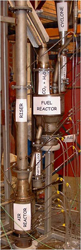
The earlier 'CO2 capture project' (CCP) demonstrated that chemical looping combustion (CLC) technology offers 100 % highly concentrated CO2 capture, no NOx emissions and no need for a gas separation process. Also, its use of well-established boiler technology means costs can be very accurately assessed. Compared to results achieved with technology used today, CLC is estimated to achieve CO2 capture cost reductions of between 40 % and 50 %. The 'Chemical looping combustion CO2-ready gas power' (CLC gas power) project worked to take CLC technology to the next level of development by focusing on issues critical to its upscaling. The EU-funded project aimed to establish and validate solutions to these issues, thus advancing work done in CCP and enabling a future demonstration phase. Project partners tested oxygen carriers for, among others, physical properties, chemical composition and gas conversion under reducing and oxidising conditions. Parameters important for CLC were investigated in oxygen carrier materials, and oxygen carrier particles with desirable properties were prepared using commercial raw materials. Four oxygen carriers were tested, and carbon conversion up to 97 % was obtained. A specific hot integrated pilot designed and built to study the attrition behaviour of oxygen carriers showed there was limited attrition of particles. A dual circulating fluidised bed (DCFB) reactor system was designed and built for CLC operation with natural gas at a fuel power of 120 kW, and a mathematical model describing the pilot plant's behaviour was developed. The global model includes submodels, one of which considers all processes affecting the reaction of the fuel gas and the oxygen carrier. The project succeeded in addressing critical issues for a future demonstration step of the CLC process, including upscaling the technology to an industrial demonstration unit. An environmental assessment was also carried out to ensure the process meets future standards of workplace safety and environmental performance. Activities and test results are positive for the production of oxygen carriers that exhibit properties considered important for CLC and that can be produced with commercial materials and production methods. A major project success was the construction of the world's largest CLC reactor, which was successfully operated with some of the developed oxygen carriers.