Green biosynthesis for pharmaceutical development

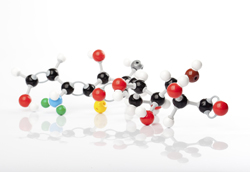
The foundation of organic chemistry is the carbon ‘backbone’, a string of carbon atoms (C) chemically bonded together and reminiscent of our own backbone. Hydrogen (H) is often bonded to the backbone as well (like arms and legs coming off the body, although generally many more than four) and the resulting compounds are the so-called hydrocarbons. When one or more of these hydrogens is replaced by another atom or combination of atoms (a functional group), a new molecule is created with electrical, physical and chemical properties related to those of the functional group. Metal-catalysed C-H bond activation is gaining interest as a highly efficient and green approach to synthetic chemistry that may open the door to the creation of molecules not possible previously. The ‘Metal catalysed C-H bond activation strategies for chemical synthesis & cancer biology’ (CHACT_RHAZ) project was designed to develop a metal-catalysed C-H bond functionalisation strategy that is site-selective and enables the rapid and flexible synthesis of biosynthetic compounds with potential application to cancer therapy. In fact, such a strategy was successfully developed using inexpensive copper catalysts. The reaction was used to enable C-H arylation of a specific class of molecules called arenes in positions difficult to reach with conventional methods. The exquisite control of functionalisation position opens the door to synthesis of a variety of compounds important in biological pathways and of interest to pharmaceutical companies. Along the way, the researchers also discovered a process for C-H arylation without the requirement of a metal catalyst. The innovation should enhance the quality and purity of products of the reactions, as it is often difficult to remove the metals once the reaction has occurred. Thus, the CHACT-RHAZ project made important contributions to the field of synthetic organic chemistry and the production of biosynthetic molecules with particular application to the development of therapies. The results should enhance the competitiveness of the European pharmaceutical industry and lead to improved quality of life for many Europeans and others.