Improved methods for detecting protein misfolding

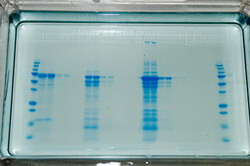
Aberrant protein folding often causes loss of function and induces the formation of protein aggregates inside or outside the cell. These events greatly affect human health and lead to various systemic diseases of neurological or other nature. The EU-funded ‘Understanding protein misfolding and aggregation by NMR’ (UPMAN) project aimed to devise novel methods for studying and understanding protein misfolding and aggregation. Project scientists focused on nuclear magnetic resonance (NMR) spectroscopy-based approaches combined with appropriate software to study the folding ability of various protein species. Highly flexible proteins incapable of folding, as well as precursors of fibrillar aggregates – the most toxic states of protein folding diseases – were analysed with the developed NMR techniques. These polypeptide chains acquire structures that differ substantially from those of the native proteins that could be analysed by conventional approaches. By generating structural information on pre-fibrillar protein states, the UPMAN study is expected to aid the development of pharmaceutical products against some of the most debilitating conditions. However, the fundamental mechanisms of protein misfolding and aggregation are yet to be delineated.