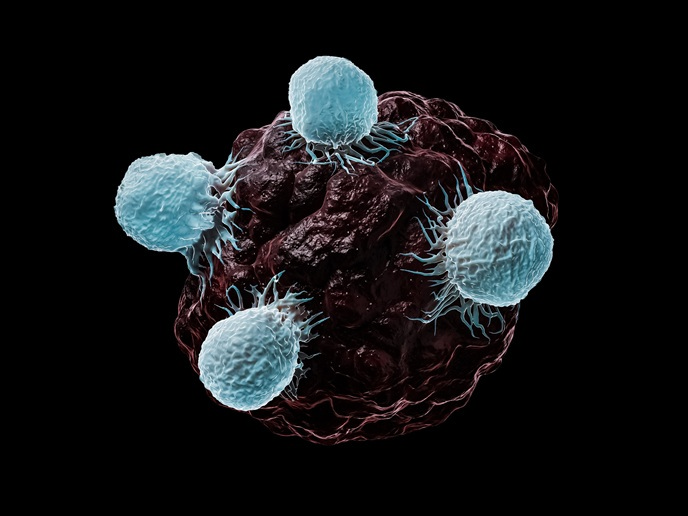
Stealth gene targeting of cancer


Gene therapy is currently a promising strategy for fighting untreatable congenital and acquired diseases. Despite the potential of this approach and the emerging clinical applications, there is a variety of fundamental drawbacks. The major difficulties arise due to a lack of safe and specific vectors for gene targeting. The consortium established within the EU-funded project ‘Gene therapy: an integrated approach for neoplastic treatment’ (GIANT) had the ultimate goal of eliminating the current drawbacks of available gene therapy vectors. GIANT’s scientists developed novel technologies for the improvement of existing viral and non-viral vectors with regards to efficient targeting of and ‘invisibility’ from the immune system. The optimised vectors were tested in both pre-clinical and clinical studies for the treatment of human prostate cancer. A number of new tumour-specific vectors with improved features based on adenovirus vectors were also developed and evaluated in pre-clinical studies. In addition, GIANT researchers developed new testing systems for the functional characterisation of these viruses, thus reducing animal experimentation. Moreover, strategies were developed for the successful targeting of optimised adenoviral vectors with on/off capabilities. Clinical tests in relevant models including mice and primary human cells uncovered the major difficulties of gene targeting in vivo. The tests showed effective targeting in the cell lines with no or low toxicity. On the contrary, the ability of various vectors to diffuse, attach and penetrate complex structures was limited in the mouse model. The knowledge and resources produced by GIANT provide a basis for the development of innovative assays and vectors for treating different tumour types.