


UK broadly welcomes the Commission's working plans for future European research policy
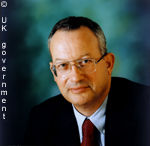
The UK Office of science and technology department of trade and industry, presided over by Lord Sainsbury (pictured) has broadly welcomed the 'originality and breadth of vision' of the European Commission's communication on 'making a reality of the European Research Area: guidelines for EU research activities (2002-2006).' 'The UK recognises that scientific research and innovation are the keys to growth, competitiveness and improvement of the quality of life,' it says. 'We warmly support the prominence given to support for mobility, which is the first essential in a genuine ERA,' it continues, later adding that it believes funds going to mobility should be doubled. And it echoes the Commission's position on the need to improve the contribution of women to European research: 'To this we would add the important issue of involving younger people,' it says. In particular, the UK supports the Commission's activity to undertake benchmarking of national research and development policies, as it stresses the importance of managing any investment in this sector. 'This effort will need to be outward looking and output oriented. The same thinking needs to apply to the management of the European research funds.' And it agrees with the Commission's opinion that the next Framework programme should not be a 16th programme of the Union countries 'but should be integrated and add value to the national efforts.' But, it criticises the Commission for not giving innovation 'sufficient prominence in its proposals: 'A much stronger chapter is needed on this issue,' it says. 'Key objectives should be to provide research support for innovation policy developments and to stimulate the exploitation of research results through the Framework.' It calls for more encouragement for participation from small and medium sized enterprises. 'We are concerned as to how the concept of 'collective research actions' would work in practice for direct SME benefit,' says the UK. The next Framework Programme should encourage mobility of researchers and support more tightly focused shared cost programmes at the EU level, concentrating on creating a critical mass in globally important science and technology sectors, continue the British. The UK also calls for an increase in end-use involvement in research along with improved dissemination and uptake of knowledge. The programme should also be outward facing it says: 'engaging in particular with our main global competitors and trading partners as well as the Accession states and developing countries.' Tighter monitoring and evaluation is also necessary, it adds. This is all in line with the Commission's current ideas, although the UK is not in complete agreement with the Commission's suggestion to contribute to the provision of infrastructure facilities. 'Investment decisions are necessarily dependent on national decision making, especially by the host country. The nature of such investment is too long term for five-year Framework programmes,' it says. 'The Commission's role and that of the Framework, should be facilitative, possibly extending to feasibility studies,' it continues. However in life sciences, where dependence on sharing small scale resources is increasing, the UK believes 'it may be appropriate for EU level support to be provided for excellence in service provision to the European research community rather than the primary research excellence.'