


New findings in cloning of animals give clues to humans
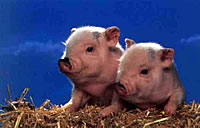
A company based in Edinburgh, Scotland has managed to clone five healthy piglets with a marker gene in a move that is seen as step towards producing 'humanised' pig organs. PPL Therapeutics says that the piglets have a marker gene which, the scientists say, shows the ability of inserting a similar gene which will overcome humans' rejection of pig organs. This would mean that pig organs could then be used for transplant purposes. It is estimated that trials could start within four years. Further research in Duke university medical centre, USA, has led the researchers there to claim that cloning humans could actually be easier than cloning animals. They say that the deformities and diseases which are found in many animal clones may not be a risk in humans. This is because a gene, which controls cell development, is passed from each parent in reproduction to the offspring. In cloning, one of these may be 'turned off', but this does not happen with humans. The researchers say that as well as having an influence on the way that cloning proceeds, this also has implications for many drugs, which although they have been rejected as causing cancer in some animal tests, may in fact be safe for humans.