Ultrasound heart treatment


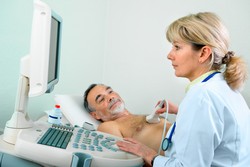
Sudden cardiac death and heart failure remain major challenges in modern cardiology. Recently, the development of novel treatments such as ablation therapy and defibrillators can ameliorate rhythm disturbances and heart dysfunction. The available technology for assessing cardiac function and determining the underlying aetiology lag behind. Towards this goal, the EU-funded USART (Ultrasound guided cardiac arrhythmia treatment) project generated novel products that could assist in the diagnosis of cardiac dysfunction. One of the exploited technologies was the widely-used ultrasound, which can provide amazing frame rates allowing cardiologists to study the rapid contraction of the heart and the function of heart valves. However, in cases of cardiac arrhythmias, higher frame rates are required to study these short-lived events. In addition, 50 % of the patients receiving ablation therapy – where tissues causing abnormal electrical conduction are destroyed – require retreatment. To improve the success of the treatment, partners introduced real-time ultrasound guidance to monitor the treatment effect. USART researchers developed ultra-fast volumetric imaging techniques and methods for reliably processing data and obtaining three-dimensional images. They tested diverging wave imaging in a commercial ultrasound system and estimated tissue velocities with acceptable accuracy. Image segmentation tools were developed for detecting and tracking the boundaries of the atrium and deducing its function. Furthermore, a method based on raw ultrasound data was optimised for real time catheter tracking during interventional procedures. This approach enabled clinicians to differentiate the tools from the remaining tissue and thus obtain reliable tool positioning and orientation information. The ultrasound-based USART methods are expected to replace X-ray as the main imaging modality for improved assessment of the underlying aetiology of heart dysfunction. The same technology will increase the success rate of cardiac interventions as well as the treatment of patients with cardiac arrhythmias.