


European Community patent needs everyone to work together
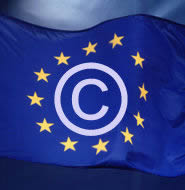
Speakers from the European Commission emphasised on Friday 12 October that many of its different DGs will need to help in order to make the European Community patent a reality. Attending a debate on the issue hosted by the Norwegian research and IT forum in Brussels, Denis Dambois, European patent attorney with DG Research, pointed out that the financial, linguistic, economic, social and technological elements associated with a new Community patent required a unified approach. He highlighted the research implications of intellectual property within the proposed European research area (ERA) as a good example of the expanding significance of the patent to many fields. 'This can help address the European paradox of good science but poor exploitation of it, by promoting the integration of research and innovation,' he said. A successful patent would mean that there would be better integration of innovation into European research policy and processes including the Framework programmes, he continued. There are many interests in finalising the issue connected with the different DGs, he conceded. But specific to DG research are the questions that arise from patenting new technologies, the role of intellectual property rights (IPR) connected with research collaborations outside of Europe and the need to have IPR guidelines for the Framework programmes' results. He also stated that a study is to be made of 'IPR in publicly funded research' to help identify the good practices in Member States, with an expert group also to be set up in order to validate its findings. IPR rules in the next Framework programme are also to be simplified. The main tenets of what is required for a European Community patent were clarified by Eric Nooteboom, head of unit at DG internal market. Affordability, legal security, procedural efficiency and simplicity are the four principles, he said. He gave figures showing that costs for securing a patent in Europe are considerably higher than in both Japan and the USA, with translation costs being one of the major expenses. He pointed out issues that remain on the agenda are the role of the national patent offices and the European Commission within the new framework, the establishment of a single specialised European Community court to deal with disputes, a resolution to the translation issues (both number of languages and appropriate costs) and agreement on the timing of pushing through the necessary legislation. Luis Ferrao, of DG Enterprise, added that improved collaboration between existing national patent offices is required as a first step to help innovation in Europe. Using the skills, knowledge and ability to disseminate information in each of these offices could help to provide a better environment for innovation, he said. With the dissemination and replication of the best practices available in the national patent offices, better opportunities will be afforded to SMEs (small and medium sized enterprises) and research centres throughout Europe, he said. Mr Ferroa also highlighted the CORDIS website as a useful source of information for EU IPR issues.