


European researchers develop new technique for diagnosis of Ebola fever
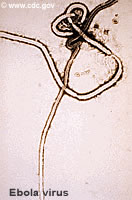
A simpler technique for the diagnosis of Ebola virus infection has been developed by African and European researchers working together in an EU-supported research project. A new epidemic of the deadly haemorrhagic fever, for which a cure has not yet been found, has been sweeping the Gabon in Western Africa in recent months. Researchers have developed and tested a new diagnostic technique based on the detection of viral genomes in the patient's blood. The new simplified test provides the same level of sensitivity as the standard test, allowing patients to be checked far more quickly for infection. The ultimate aim of the scientific cooperation is to achieve mass production of the test once its evaluation is completed. Philippe Busquin, the EU's Research Commissioner, said: 'This breakthrough shows the value of international, multi-disciplinary cooperation between African and European research teams in such a vital area for human health where the impact stretches beyond the frontiers of a single country and even a single continent. In particular, better knowledge, better early detection and better treatment of diseases such as Ebola fever are essential for us all.' The project, which began in 1998, was co-financed by a European Commission donation of 500,000 euro under the international cooperation thematic priority of the Fourth Framework programme for research (FP4). The initiative brought together researchers from the Centre de Recherche Mérieux-Pasteur in Lyon, France, the laboratories of the Centre International de Recherche Médicales de Franceville in Gabon, the Marburg Institut für Virologie in Germany, the Rotterdam Instituut voor Virologie in the Netherlands and the Institut Pasteur de Dakar in Senegal, Africa. The Ebola virus, which has been known in Africa since 1976, is a virulent and highly contagious disease with a death rate of up to 88 per cent of those infected. Identifying haemorrhagic fever such as Ebola is made difficult by the lack of specific symptoms at the onset of the disease. The latest outbreak of Ebola in the Gabon began at the end of last year. It follows previous outbreaks in the area in 1994, 1995 and 1996. There so far have been 42 confirmed cases in the latest epidemic, 34 of them fatal. A spokesperson for Mr Busquin said that the evaluation of the new test, which is being used for the current Ebola outbreak in the Gabon, will be completed at the end of March 2002.