


Busquin opens first GMES steering committee meeting
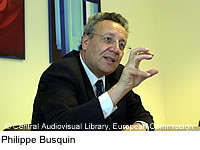
EU Research Commissioner Philippe Busquin opened the first meeting of the GMES (global monitoring of environment and security) steering committee in Brussels on 19 March, which brings together users and suppliers of GMES services in order to assist with the implementation of the initiative. The Commission plans to develop an operational and autonomous European global monitoring capability for environmental and security purposes by 2008. GMES aims to bring together Europe's fragmented satellite observation and remote sensing activities in order to support Community policies. 'We have first rate science and space technologies in Europe. We must put them to greater and better use to help us meet the challenges of our globalising society. GMES is not only of strategic importance for space research, it will also help Europe to better project its values and policies in the world, for example to ensure sustainable development,' said Commissioner Busquin. The monitoring system, a joint initiative of the European Commission and the European space agency (ESA), will have an important role to play in responding to national disasters. Combining data from ENVISAT, launched on 1 March, and other terrestrial, aerial and seaborne observations systems, GMES will allow European researchers, private companies and public authorities to better monitor climate change, track environmental pollution and react to emergencies. In the areas of safety and security, GMES will also help to optimise maritime and other traffic, speed up cross border responses to catastrophic events, enable the monitoring of refugee movements and facilitate the distribution of food and medical aid. Globally, GMES will provide verification tools to contribute to the precise monitoring of the implementation of international protocols, such as the Kyoto protocol. And at a regional level, the system will help local authorities to pinpoint problems such as shoreline erosion and environmental stress as well as facilitating the appropriate responses to catastrophic events. The GMES initiative will comprise a three tier structure: the steering committee, a support team whose role will be to prepare proposals to be carried out in the GMES action plan, to coordinate and to ensure overall consistency of inputs, and a GMES forum, which will foster an ongoing dialogue between all parties involved in the use, monitoring and information production for environment and security policies.