


Research advisory board to underline importance of research to European Convention
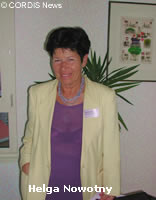
EURAB, the European research advisory board intends to submit a document to the new European Convention outlining the importance of research, EURAB's chairperson, Professor Helga Nowotny has told CORDIS News. EURAB was established in June 2001 and its 45 members include some of Europe's best known scientists and industrialists. Its task is to advise the European Commission on research policy. Professor Nowotny says that the group would like to 'formulate a strong message on the importance of research and innovation,' and submit it to the European Convention. 'It's very clear that a group that deals with the future of Europe, with the Treaty and the convention that is to be set up should contain something on knowledge, on the importance of research and the importance of innovation,' Professor Nowotny told CORDIS News. Unlike EURAB's predecessor, ESTA (European science and technology assembly), the board represents both industry and academia. In another break from ESTA, the Commission is not responsible for appointing members to EURAB. Instead, the European science foundation (ESF) nominated 20 people, as did the Union of industrial and employers' confederations of Europe (UNICE). The Commission then nominated five more people in order to ensure geographical balance. Professor Nowotny believes that this independence is important. 'The recruitment process should show that there's a certain independence from the Commission,' she said. EURAB offers long term strategic advice on the European Research Area as well as short term advice. On 28 May, the day on which Professor Nowotny spoke to CORDIS News, EURAB had a plenary session in which they reviewed the progress of a number of working groups and discussed more specific issues such as the Sixth Framework programme's eighth thematic priority (which includes anticipating future needs), calls for expressions of interest, the role of universities and how to improve innovation. Professor Nowotny is adamant that EURAB's recommendations on evaluation, which include the abolition of anonymity for proposals and a change in the way evaluators are appointed, are logical. 'There is nothing particularly new or radical in the proposals we came up with. I would say it is good common sense based on experience,' she said. Regarding the eighth priority, EURAB are concerned with how emerging breakthroughs should be identified. They would like to see a system that maintains peer review but 'tries to include as much risk taking as possible.' Anonymity should be abolished because it is a 'smokescreen' and 'does not work' claims Professor Nowotny. People who work in the field recognise who has submitted a proposal from the style, the citations, the methodology or simply from knowing who is active in the field, explains EURAB's chairperson. The recommendations for the appointment of evaluators are aimed at resolving 'the one thing that was heavily criticised in the Fifth Framework programme - volunteering to be a reviewer,' said Professor Nowotny. 'This went against the culture of academia and its not done. You are asked to be a reviewer,' she said. She proposes that the Commission asks European and national research organisations to recommend reviewers as they know who is experienced in the field. Professor Nowotny describes working with the Commission as a very positive experience. 'We have the feeling that the Commission is genuinely interested in getting our advice, and equally important is that we are getting the relevant information from the Commission,' she said. 'I am sure there will be cases where our advice will not be taken up or where there is a difference of opinion, but this is as it should be if this will launch a wider debate,' she added.