


Parliament and Council debate Commission's communication on biotechnology
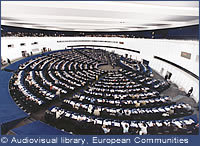
On 21 November, the European Parliament adopted what it described as 'a very biotechnology-friendly' resolution based on the Commission's communication on life sciences and biotechnology, a document that the Competitiveness Council will debate during its next meeting on 26 November. In a vote during the Strasbourg plenary session, MEPs rejected most of the amendments proposed mainly by the Green group, and emphasised the need for a predictable and ethical legal framework for biotechnology companies and farmers. Such a framework, the report concludes, should aim to secure consumer safety and competitiveness, and prevent both a 'brain-drain' in the field and a future dependency on biotech imports. Specifically, the report calls on the Commission to launch a 'bEurope' policy in the field of biotechnology, and goes on to say that: 'Parliament supports the Commission's idea to play a leading role in developing international guidelines but regrets that this action is focussed mainly on the food sector.' On the issue of food, however, the Parliament resolution 'strongly supports the view that the existing de-facto moratorium on genetically modified foods in force since 1998 should cease, in order to promote innovation.' MEPs also argued that Member States should improve education in the field of biology, with a particular focus on genomes and microbiology. On a more general level, the resolution stresses the need to ensure that all consumers have access to reliable information about genetically modified organisms (GMOs), to promote confidence and informed choice. Finally, the Parliament repeated a previous call for the imposition of a universal and specific ban at the level of the United Nations on the cloning of human beings at all stages of formation and development. The Competitiveness Council, meanwhile, will meet in Brussels on 26 November and hold an exchange of views on the same Commission communication before adopting conclusions aimed at establishing an 'operational roadmap' for the strategy on biotechnology. The draft conclusions state that 'the potential offered by life sciences and biotechnology in areas such as healthcare, agriculture and food, industrial products and processes and environmental protection should be continuously assessed as regards benefits and risks, whilst anticipating economic, social and environmental consequences and ethical aspects.' They note that the development of a competitive EU biotechnology industry requires comprehensive and coordinated policies covering all major areas of biotech applications. The Council will also note that it has requested that the Commission cooperate closely with it in establishing the operational roadmap, clarify the responsibilities of the various actors involved, and set a timetable for these responsibilities to be carried out.