


Commission seeks to encourage competition between broadband platforms
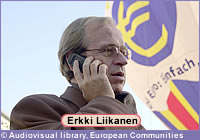
The EU and Member States must encourage competition between high-speed Internet access platforms whilst remaining technology-neutral as no single technology can ensure total broadband coverage in Europe This was the message delivered by Erkki Liikanen, Commissioner for Enterprise and Information Society, to the European telecommunications network operators' association (ETNO) conference, entitled 'making broadband happen', in Brussels on 3 December. 'ADSL and cable are driving broadband access at the present,' said Mr Liikanen, 'but the potential of [third generation] mobile, satellite, fibre optic and fixed wireless systems are all well documented. No single technology can ensure the total coverage of the EU.' The Commissioner went on to warn delegates at the conference that broadband alone cannot deliver the productivity gains that Europe seeks, and that high-speed Internet access 'must be accompanied by a reorganisation of businesses and an investment in skills.' Mr Liikanen also stressed that public intervention to facilitate access to broadband services may be necessary in those areas where the market fails to deliver the required infrastructure. The Commissioner said that he would not elaborate on a report that appeared in that day's issue of the Financial Times which claimed to have seen a draft copy of the Commission's report on the telecoms sector. The article suggests that the Commission will conclude that the telecoms market is enjoying healthy levels of growth compared with the EU average, and will therefore assume a tough stance on regulation of the industry. Mr Liikanen said simply that people would have to wait for the final version of the report to be published later in the week. Ben Verwaayen, Chief Executive Officer of British Telecom (BT), also declined to discuss the article, which asserted that large telecoms companies such as BT were unlikely to be happy with some of the Commission's conclusions in the report. Instead, Mr Verwaayen stated that he was 'very encouraged' by what Mr Liikanen had said in his speech. Mr Verwaayen's clearest message to the Commissioner was in stressing the need for a clear and predictable regulatory framework, which would in turn encourage telecoms companies and the finance industry to risk large-scale investments on rolling out broadband technologies. 'Broadband cannot be seen as simply the next product, it is tool for a new lifestyle,' Mr Verwaayen said. 'It requires the complete rebuilding of network capabilities. We have to take risks; have to invest.' The BT chief warned against what he called 'following the path of duplication', as the industry had done in the case of third generation mobile networks. He described this as an unsustainable business model that had led to the current market downturn, and urged the industry to look towards diversification. ETNO is an industry association that represents 40 major telecom companies from 35 European countries. The ETNO conference was held two days before the Telecoms Council was due to meet in Brussels on 5 and 6 December. In a statement to the Council, ETNO calls on the Commission and national regulatory authorities to 'pursue a market-driven, investment-friendly regulatory approach to new and emerging markets,' and states that 'Only inter-platform competition will lead to sustainable competition, innovation and a wide range of affordable services for consumers.'