


FP5 was learning period for candidate countries, says head of unit
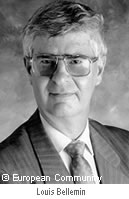
The Fifth Framework Programme (FP5) represented a learning period which will lead to higher participation of the candidate countries in the Sixth Framework Programme, said Louis Bellemin, head of unit for international scientific cooperation policies in the Commission's Research DG, in an interview with CORDIS News. Participation in the Fifth Framework Programme (FP5) was lower than the Commission had expected and lower than the candidate countries themselves had wished for. As the Sixth Framework Programme (FP6) gets underway, the candidate countries are getting used to being full participants in the framework programme. But are they capable of cooperating and competing with the current EU Member States on an equal footing? Mr Bellemin analysed the challenges ahead for the candidate countries and outlined how the Commission intends to encourage and support their participation in FP6. Asked how far the candidate countries have come, Mr Bellemin emphasised that the EU's 13 candidate countries cannot be grouped together and spoken of as one. 'Estonia's situation has nothing at all to do with that of Turkey, and that of Cyprus is totally different to that of Bulgaria. One cannot really analyse the candidate countries as a homogenous group,' said Mr Bellemin. There are some candidate countries which, at a scientific level, are fully comparable with some Member States, said Mr Bellemin. He outlined how some of these countries, in particular Estonia, Hungry, Slovenia and Cyprus, already have better capacities for and traditions of cooperation with foreign researchers, making their participation in the framework programmes more straightforward. 'There are other countries that are in a more difficult situation, for various reasons. Either scientific potential is weaker or they were far more isolated from the international community during a certain period. They have had real difficulties in participating.' The average research expenditure of all of the candidate countries is about 0.6 per cent of GDP, less than half that of the EU's average, 'which gives an idea of the different level between them and us,' said Mr Bellemin. The candidate countries are also disadvantaged by brain drain and the fact that their high quality research teams are often small teams, while their research equipment and infrastructure are sometimes not at the same level as those in the Community. 'Their size is often not sufficient for competing with those of the Member States',' said Mr Bellemin. But the FP5 'learning period' in which all candidate countries except Turkey were associated to the framework programme will stand the countries in better stead for FP6. 'Our way of operating, our modes of intervention, of research management were often very different and candidate countries were not well acquainted with them. But that is the past,' emphasised the head of unit. The candidate countries now have a better understanding of the EU Framework Programme ways and means of implementation, they are better organised and they have far more contacts with researchers in the Member States. There are also aspects to FP6 which are advantageous for the candidate countries, according to Mr Bellemin, including measures to ensure the participation of small and medium sized enterprises (SMEs), as many of the candidate countries have a high number of SMEs. Networks of Excellence will also permit the regrouping of excellent candidate country research teams with teams in the EU. FP6 also includes provisions to promote mobility. Candidate country researchers can receive training in the EU and then return home, thus strengthening the human potential in the region. Both young and experienced researchers from the Community will also spend periods of time in candidate country laboratories. 'This will not only reinforce the human potential in the candidate countries, but will reinforce linkage with our scientific community,' explained Mr Bellemin. 'But that is not enough, so we have specific measures,' said Mr Bellemin. 'All candidate countries, including Turkey, are now associated [...]. They are therefore treated like the Member States, and are almost like Member States [...]. But this 'almost' is very important. They have the same rights [the only area in which these countries are not involved is voting in the programme committees] and obligations as the Member States. But they are not Member States and they are not at the same level as our Member States,' he said. 'In a competition, one takes the best. It's not important whether they are German, English, Italian, Spanish or French [...]. If they are not at the same level as the Germans, English and French, they will have certain handicaps.' This is the reason behind the specific measures aimed at stimulating and increasing candidate country participation in FP6. The Commission is therefore seeking to ensure the timely diffusion of correct information on FP6 and supporting research management training. Mr Bellemin also emphasised the importance of a 'good' system of national contact points and suggested that CORDIS is one of the tools for disseminating information on the candidate countries as well as to the candidate countries. Finally, brokerage events will ensure that researchers from both regions get to know of each others' existence and develop scientific and technological cooperations. Mr Bellemin was keen to emphasise that individual countries must also implement measures to improve their chances of competing with the Member States. He cited a successful initiative by the Romanian government, which has brought together several small but excellent research teams working in nanotechnology to form CEBITE, 'a more or less unique centre' which has since formed links with organisations in Germany and France. Obviously the candidate countries are enthusiastic about forging new links with researchers in the Member States as that is their route to participation in FP6, but what about the current Member States? Do they share this enthusiasm? Mr Bellemin is '100 per cent sure that they are willing and trying to develop cooperation with the candidate countries' as there is a 'common interest'. 'Adding a candidate country team to a project, the same as adding for instance a Spanish team, is recognition of what that team will bring to the project, the added value, Mr Bellemin told CORDIS News.