


Commission lends its support to Scottish salmon
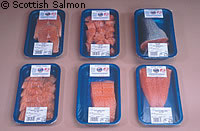
The European Commission is satisfied that Scottish salmon is safe to eat, despite researchers in North America warning that the farmed variety sold in many supermarkets contains up to ten times more cancer causing chemicals than its wild counterpart. The recent safety debate centres on the presence in farmed salmon of Polychlorinated Biphenyls (PCBs) and dioxins, chemicals linked with cancer and developmental defects. The team of American and Canadian researchers that carried out the study recommended that consumers would be wise to limit their intake of farmed salmon to just two ounces (around 50 grams) per month. But a spokesperson for EU Health and Consumer Protection Commissioner David Byrne said: 'We agree with the assessment made by the UK food standards agency that the levels [of chemicals] in our European salmon do not exceed EU limits.' The UK food standards agency had earlier stressed that the levels of dioxins and PCBs found in farmed salmon during the US led study were within World Health Organisation and EU guidelines. Those guidelines, which are based on scientific advice, were 'accurate and valid,' added the Commission spokesperson. The Scottish salmon industry accused the American researchers of being 'deliberately misleading'. Dr John Webster, a technical consultant for the industry body Scottish Quality Salmon, said that the research had ignored all the benefits of eating farmed salmon on a regular basis. 'The health benefits of eating oil rich fish, like salmon, are well established, with over 5,000 scientific and medical papers on the subject. The beneficial effects of omega-3 fatty acids on a wide range of conditions are well documented,' he argued.