


Irish President hears SME concerns regarding Lisbon agenda
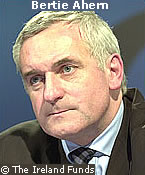
The current President of the European Council, Ireland's Bertie Ahern, met representatives from the European association of craft, small and medium sized enterprises (UEAPME) on 26 February. The delegation presented Mr Ahern with the UEAPME position paper on the Lisbon strategy, which calls for a strengthening of the Lisbon goals, as well as modifications addressing the situation of small and medium sized enterprises (SMEs). Mr Ahern welcomed the UEAPME paper, and acknowledged the importance of SMEs for economic development: 'Small and medium enterprises have played a very important role in the success story of the Irish economy. SMEs have helped create the wealth, the jobs, the skills and the innovation that have driven our economic success. I am very aware that we need to facilitate these businesses in Europe as well as nationally.' The UEAPME paper claims that Europe 'faces a serious delivery gap regarding the goals of [the Lisbon] strategy, even if progress has been made in some areas.' The organisation believes that there has been a failure to deliver at three levels: at European level, where the institutions have been unable to agree on concrete measures; at national level, where governments have sometimes been unable or unwilling to transpose directives into national law; and among trade unions, who 'do not show enough commitment to the agreed reforms, even if there is a common understanding between the European social partners about the necessity of these reforms.' The UEAPME also claims that many aspects of the Lisbon agenda are directed towards the needs of big and multinational enterprises and their employees. In this context, the paper calls for a reduction of administrative burdens, greater access to finance, reforms to harmonise the different taxation systems in Europe, and a focus on traditional SMEs in addition to that on start-ups and those operating in growth sectors. The organisation is sceptical about achieving the Lisbon goals, but asserts that the EU has no choice but to press ahead with the foreseen reforms: 'Even if nobody seriously believes anymore that the original Lisbon targets can be achieved in time, there is no alternative but to go on with the agreed agenda [...]. The Lisbon agenda is necessary to bring Europe back to a growth path.' Mr Ahern reaffirmed that the Irish Presidency will press for greater implementation of the Lisbon targets at the spring European Council.