


The European steel sector gets a makeover
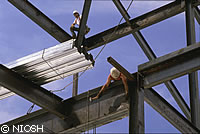
The European Commission and the European steel industry have launched a EU Steel technology platform to develop a roadmap for the industry up to 2030. The platform will concentrate on four issues referred to collectively as the four Ps: profit, people, partners and planet. Although currently the EU steel sector leads the world, providing direct employment for more than 250 000 people, the European steel industry is facing a number of challenges that need to be addressed urgently if it wants to retain its leadership position. 'Steel represents a key sector for Europe.' said European Research Commissioner Philippe Busquin. 'But more research and investment are necessary to remain competitive and face the challenges of globalisation and sustainable development. Thanks to a long track record of excellence in scientific cooperation, innovation and networking and the support of EU steel research, the sector is ready to face these challenges. Steel industry players participating in the steel technology platform will join forces to define a vision to meet future challenges and create a true European research area in the steel sector.' At present, the European steel industry enjoys a competitive advantage compared to other parts of the world because of continuous and integrated research efforts financed by the European Coal and Steel Community (ECSC). However, the centre of gravity is gradually moving towards Asia as China steps up its production by 40 million tonnes. On top of this, the imminent EU enlargement reveals a need for an extensive restructuring of the industry. Another major issue for the industry is the increasing pressure to develop new and cleaner processing methods to reduce CO2 emissions, while issues of work safety and the need to identify necessary qualifications and skills for tomorrow's steel workforce are also high on the agenda. The new technology platform will address those challenges by bringing together all relevant stakeholders. The partners will provide a common policy agenda and identify the research and development (R&D) initiatives that deserve financial backing at European level. The goal is to support the transformation of the European steel industry towards a more knowledge based and value added industry with improved competitiveness and sustainability. Emphasis will be on innovation in new production technologies such as advanced computers systems, measurement sensors, physical models and methods of artificial intelligence. In parallel, intensive metallurgical research will be conducted to profit from opportunities presented by new thermal cycles for designing products, especially for cars. To fulfil environmental obligations, vacuum and plasma technologies will also be investigated. All these ventures require major investments in high risk, long term projects, as well as cooperation between specialists from industry, research centres and universities. To achieve this, the European Commission will provide funds under the Sixth Framework Programme (FP6) to reduce CO2 and greenhouse gas emissions in steel production as well as for research in new materials, new production processes and energy. This is in addition to the ECSC, which provides 43 million euro per year for steel research.