


Europe must adapt to cope with climate change, argues EEA report
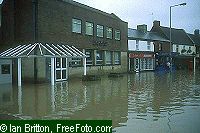
The European Environment Agency (EEA) has published a new analysis outlining the likely impacts of climate change in Europe, and has called on 'all stakeholders who are involved in any kind of policy, business or service that will be affected by climate change' to adopt adaptation strategies. The report, 'Impacts of Europe's changing climate', examines the progress of climate change and its impact in Europe using 22 indicators in eight broad categories: atmosphere and climate; glaciers, snow and ice; marine systems; terrestrial ecosystems and biodiversity; water; agriculture; economy; and human health. It concludes that: 'For almost all the indicators a clear trend exists and impacts are already being observed.' The report writers believe there is strong evidence that most of the global warming seen in the last 50 years has been caused by human activities, in particular through greenhouse gas emissions. It is already possible to see the consequences of rising temperatures and their effect on the earth's climate, according to the EEA. The concentration of carbon dioxide in the lower atmosphere is at its highest for at least 420,000 years, the 2003 heatwave resulted in 20,000 extra deaths being recorded in western and southern Europe, and in that year alone the mass of Alpine glaciers was reduced by ten per cent. However, when the observed trends for each of these indicators is projected into the future, the picture becomes still worse. By 2100 the European average temperature will be between 2 and 6.3 degrees Celsius warmer than in 1990, and: 'The 'sustainable' EU target of limiting global temperature increase to no more than two degrees Celsius above pre-industrial levels is likely to be exceeded around 2050,' predicts the report. Europe could witness more bad harvests due to an increase in the frequency of extreme weather events, it continues. By 2050 around 75 per cent of the glaciers in the Swiss Alps are likely to have disappeared; by 2080 droughts and intense precipitation events will become more frequent; and projections show a predominantly ice-free Arctic Ocean in summer 2100. Thus, argues the EEA, in addition to taking action to try and mitigate it, society has to prepare for and adapt to the consequences of inevitable climate change. In order to prevent or limit damage to the environment, society and economies, 'adaptation strategies for affected systems are required at European, national, regional and local level.' The report presents five reasons why such adaptation strategies should be implemented as soon as possible. Anticipatory adaptation is more effective than forced or emergency adaptation, it argues; future climate change may occur more rapidly than predicted; better adaptation to extreme climatic events would deliver immediate benefits; as would removing policies and practices that result in ineffective adaptation; and climate change brings opportunities as well as threats, which will be better realised following sufficient adaptation. The EEA presents examples of some adaptation strategies that may be introduced in the future. To mitigate increasing temperatures, for example, building designs could be modified to cope with higher temperatures and an increased need for summer cooling. The ability of dams and other types of flood protection to cope with enhanced runoff from more intense storms could be assessed, and ports and harbours should be modified and sea defences enhanced in order to prepare for rising sea levels. 'This report pulls together a wealth of evidence that climate change is already happening and having widespread impacts, many of them with substantial economic costs, on people and ecosystems across Europe,' said EEA executive director Professor Jacqueline McGlade. 'Europe has to continue to lead worldwide efforts to reduce greenhouse gas emissions, but this report also underlines that strategies are needed, at European, regional, national and local level, to adapt to climate change. This is a phenomenon that will considerably affect our societies and environments for decades and centuries to come,' Professor McGlade concluded.