


Europe and India to go to the Moon together
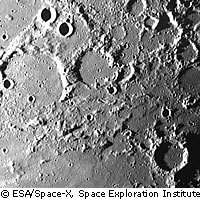
The European Space Agency (ESA) Council has given the go-ahead to a joint lunar exploration mission between ESA and India. Under the agreement, ESA will coordinate and support the provision of three instruments and provide other contributions in-kind, while all data obtained by the instruments will be made immediately available to all ESA member countries. Chandrayaan-1 will be the first mission to the moon for India and the Indian Space Research Organisation (ISRO). ISRO was founded in 1969 and launched its first satellite in 1975. Since then it has developed a number of launch vehicles as well as satellites for Earth observation, remote sensing, telecommunications and weather forecasting. This will be, however, the agency's first foray into space science. The three instruments to be provided by ESA are: CIXS-2, an imaging x-ray spectrometer; SARA, a Sub-keV atom reflecting analyser; and SIR-2, a near-infrared spectrometer. ISRO also plans to include a 250 kg remote sensing satellite in the payload in order to investigate the mysteries surrounding the origin and evolution of the solar system in general, and the Moon in particular. The satellite will be operational for two years. ESA's SMART-1, launched in 2003, put Europe in the lead in the race back to the Moon. As well as India's planned mission, Japan, China and the US are all expected to launch lunar missions in the coming years. ESA believes that cooperation with India will help to keep Europe's scientists at the forefront.
Countries
India