


Hübner uses links between cohesion and Lisbon objectives to make the case for regional funds
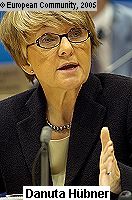
EU Regional Policy Commissioner Danuta Hübner has drawn comparisons between the objectives of the Lisbon strategy and cohesion expenditure priorities. She also used these links to call on the EU institutions to reach a rapid agreement on the EU's financial perspectives in a way that provides adequate funds for addressing these common objectives. For the period 2000 to 2006, around 265 billion euro in investments from Structural Funds and other instruments has been set aside to assist the EU's poorest regions and those in structural difficulties - this amounts to one third of the EU budget. A recent report by the Danish Technological Institute assessed the similarities between the Lisbon strategy and cohesion spending priorities and found that over 50 per cent of investments from the Structural Funds, one of the key elements in cohesion policy, are directed towards 'Lisbon-type' initiatives. The allocation of the 'performance reserve' also gives an indication of the extent to which Structural Funds are being invested in research and innovation, and how successful these initiatives have been. The performance reserve was introduced for the 2000 to 2006 programming period. It involves four per cent of the appropriations allocated to each Member State being placed in a reserve until a fixed date, at which time it is distributed to the country's most successful programmes. As the Commission's third progress report on cohesion states: 'Many Member States used the performance reserve to strengthen their support of the knowledge-based economy through cooperation between research institutes and businesses, the development of business clusters and research centres, investment in broadband access, the development of regional innovation strategies and the training of researchers, as well as applied research projects.' The performance reserve was also used in some countries to support entrepreneurship through grants to start-ups and small, innovative businesses. This approach is in line with the wishes of the EU's Heads of State and Government, who in March 2005 urged regional and local actors, among others, to take greater ownership of the Lisbon strategy, and to actively participate in the achievement of the Lisbon objective of making Europe's economy the most competitive in the world by 2010. The 2005 Spring European Council also highlighted a need for innovation poles and partnerships at regional and local levels, and called for a redeployment of state aid in favour of certain horizontal objectives such as research, innovation and an inclusive information society.