


Dark fibre makes GÉANT2 network faster than ever
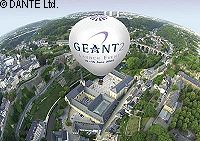
Europe's high-speed research networking infrastructure, GÉANT2, became quicker than ever on 14 June thanks to a switch to dark fibre-optic cables, which use pulsed light (photons), rather than electrons, to transmit data. Dark fibre enables the world's leading research and education network to reach transfer speeds of up to 320 Gigabits per second, thereby providing unprecedented computing power to an estimated three million users in 34 countries. One of the key innovations of GÉANT2 compared with similar networks in the US or Asia is its seamless integration of dark fibre with more traditional broadband technology, allowing it to provide services to schools via partner networks. At a launch event in Luxembourg, Information Society and Media Commissioner Viviane Reding said: 'GÉANT2 is a truly giant step forward. With this modern network, we will ensure that researchers will be better and faster connected everywhere in Europe than anywhere else in the world.' Another new service offered by the upgraded network is a Europe-wide 'roaming' facility that enables scientists to access GÉANT2 and their host institution's working environment from anywhere and at any time. The improved service offered by GÉANT2 opens up a number of exciting research opportunities, for example by making valuable biological collections available online, or by linking up radio telescopes across Europe to enable researchers to study the Universe in real time. Very Long Baseline Interferometry (VLBI) is a technique that harnesses the power of a number of radio telescopes simultaneously, generating far more detailed images than any single observatory could achieve on its own. The data transfer rates offered by GÉANT2 allow scientists to collate large amounts of data spread across numerous locations, ensuring that they can analyse them in real time as they is measured. GÉANT2 is a truly European joint effort, with the Commission contributing 93 million euro - just under half of the total budget - under the information society technologies (IST) strand of its Sixth Framework Programme. The remainder is funded by national research and education networks.