


European scientists grow pure brain stem cells in vitro for the first time
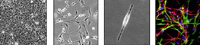
Scientists at the Universities of Edinburgh, Milan and Pavia, cooperating within the EuroStemCell project, have developed a new technique to grow pure brain stem cells. The finding could prove a major breakthrough in the race to treat neurological diseases such as Parkinson's and Alzheimer's. The research is being funded under the EU's Sixth Framework Programme (FP6). In the body (or in vivo), stem cells can both divide to produce copies of themselves and differentiate to produce other, more specialised, cell types. Until now, scientists had not been able to sustain the ability of neural stem cells to replicate themselves when grown in a dish (in vitro): the population of cells in the dish would always become mixed, with only a few stem cells and a majority of specialised cells. By changing the growth conditions for the cells, the Edinburgh and Milan labs have for the first time established pure stem cell divisions, thus avoiding the unwanted differentiated cells. Researcher Luciano Conti explains: 'We applied techniques developed to control the behaviour of embryonic stem cells to our neural stem cells. The knowledge we already have about embryonic stem cells helped us to understand and control these more specialised stem cells.' The scientists have replicated their initial findings with mouse cells, using human stem cells. The research teams made different cell types of the nervous system from the neural stem cells. All were in perfect working order, suggesting that the neural stem cells can be used to generate, and study in detail, the cells that are affected by neurodegenerative disorders such as Huntington's and Parkinson's diseases. Researchers will then be able to study the cellular and molecular processes that go wrong in disease - a crucial first step in developing effective, safe therapies. Drugs that are being developed to interfere with the onset and progression of the disease may now be tested on the neural stem cells, or on specific cell types made from them. Such an approach will reduce the number of animals used in this type of research. The researchers also feel that their work may be a step in the direction of using stem cells to replace damaged tissue. 'The purity of the cells, and the fact that they do not make tumours, means they should be valuable for studying the potential of transplantation to repair damage,' says Steve Pollard, one of the Edinburgh researchers. Professor Austin Smith, leading the Edinburgh team, believes that sharing information and knowledge is critical for taking stem cell research forward. 'Collaboration with our colleagues in Milan, through the EuroStemCell project, made our breakthrough possible. We have published in an open-access journal and included comprehensive practical protocols so that other researchers can replicate and advance this work.' EuroStemCell is an Integrated Project of the European Union's Sixth Framework Programme. It falls within the priority on Life Sciences, Genomics, and Biotechnology for Health, which aims to advance medicine and quality of life for European citizens. The EU is providing 11.9 million euro of support to the EuroStemCell project during its four year duration.
Countries
Italy, United Kingdom