


Sea sponges: perfect allies to pierce tissue rejection in humans
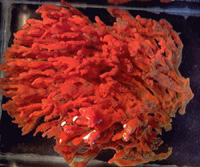
Understanding why some transplant patients reject their new organs requires a working knowledge of how cells recognise and accept or reject each other. A researcher from the University of Barcelona has found the perfect ally in this quest: the red beard sea sponge, an Atlantic species that grows abundantly from just north of Cape Cod down to Florida in the US. The red beard sponge, Microciona prolifera, has a cell-to-cell recognition system that, on a basic level, is similar to that of humans but much simpler. It is also a good organism for laboratory research, since its cells and cell adhesion molecules can be isolated with simple, fast, and non-disruptive methods, and it can be studied due to its fingerlike structures, make grafting experiments relatively straightforward. In recent experiments carried out on these sponges, Dr Fernández Busquets and his colleagues at the Marine Biological Laboratory in Woods Hole, Massachusetts, where he is currently a visiting researcher, are studying the cells and molecules believed to be involved in the process of tissue rejection. By grafting together pieces of different individual sponges that will reject each other - a process that approximates what sometimes happens in human transplants - the scientists have observed that cells known as grey cells migrate to and amass at the graft site, a clear suggestion that they are involved in non-self tissue recognition and rejection. Researchers believe that grey cells may be a primitive form of our immune system's human killer cells. Dr Fernández-Busquets has also been researching the role of the molecule called 'aggregation factor proteoglycan', which he has recently identified as another potential player in sponge tissue rejection reactions, and which is very easy to study in sponges. The human version of this molecule, which is different from the sponge version but similar in structure, is also believed to have important functions in cell-to-cell interactions, but is hard to study. The ultimate goal of this research is to provide insights into the machinery behind human tissue rejection and immune responses in hopes of someday being able to control these processes and save lives.
Countries
Spain