


Researchers must move around more, says Liberali
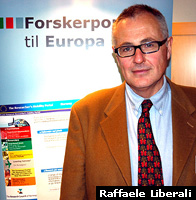
The EU Commission has received signals that individual Member States have now begun taking seriously discussions about the exchange of researchers, according to Raffaele Liberali, Director of 'the human factor, mobility and Marie Curie actions' within the Commission's Research DG. '[This] is positive, because we need to make it easier and more attractive for researchers to cross borders. In the future, researchers must move around more,' he said, during a recent conference in Oslo that marked the launch of the Mobility Portal in Norway. One of the reasons why researcher mobility has received increased interest is the EU priority of investing in skills and education, research and innovation in order to boost growth and create more jobs by making Europe a more attractive place in which to invest and work. One way to reach this goal is for individual countries to raise their contributions to research to three per cent of gross national product (GNP). 'But to invest in research is to invest in people. Raising the contribution to research to three per cent of GNP means recruiting 500,000 to 700,000 new researchers in Europe. The Commission will therefore prioritise making it more attractive for European youth to choose a career in research as well as stimulate 'emigration' of researchers from countries outside the EU and Europe,' said Mr Liberali. Thus, along with traditional dissemination of information about researcher mobility and the different opportunities offered by a career in research, the Commission has launched two documents: a 'European charter for researchers' and a 'code of conduct for researchers', which make recommendations as to the best means to develop research policies that encourage researcher mobility and recruiting. The Commission wants individual countries cooperating within the EU to establish a set of common, generally recognised rights and duties for researchers. Mr Liberali acknowledges that a career in research can often feel uncertain: 'If you are pregnant or sick, there is always another that is ready to hop into you position, and it is not always a given that you can get the position back later. Another point is the intense requirement to publish - 'publish or perish!'. If someone, for example, is a researcher in industry, where it is not as typical to publish as often as within academic institutions, this quality requirement can be unfair.' By which means one should take care that this common directive is integrated into each individual country's research policy was one of the questions raised at the conference. 'The European charter for researchers and the Code of conduct for researchers are not directives that will be forced on the government and the research environment. We, in the Commission, see these documents as part of the process of increasing awareness,' said Mr Liberali. 'But I am not a man that only believes in good intentions. I also believe in action. We cannot shape a research policy only with the help of carrots. Some coercion must also exist', he added, pointing at the possibility of including mobility as part of the review criteria used to fill research positions. 'An important link in the EU Commission's work to promote mobility is establishing an Internet portal for international distribution of research positions, with information about offers and conditions in individual countries, which will make it easier for researchers to orient themselves. A network of mobility centres offering practical advice and hints for researchers and their families both before and after they have moved,' explained Mr Liberali. The Norwegian track in this information highway was established by the Research Council of Norway and includes mobility centres in universities, trade schools, research institutes and industry. In addition, a mobility portal, launched during the conference, has been created with the double purpose of informing foreign researchers that want to work in Norway and Norwegian researchers who wish to travel abroad. Norwegian Minister of Education and Research, Kristin Clement, declared: 'Increased international research cooperation and increased mobility to Norway is necessary to ensure that Norwegian researchers maintain high quality and are competitive. The Norwegian mobility portal is an important step to strengthen such cooperation.'
Countries
Norway