


Editors advise research projects on how best to approach the business press
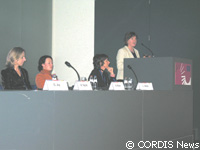
The recent conference, Communicating European Research 2005, raised two justifications for increasing efforts in communicating science to a wider audience: firstly, there is a responsibility to inform taxpayers how their money is being spent on publicly funded research (and perhaps gain their support for new and increased research initiatives), while secondly there is a role for communication in getting new technologies to the marketplace. Given Europe's challenge in transforming research results into commercial success, it was this second role that was the main focus of a conference session organised by CORDIS within the CER2005 programme. The specialist business press aims to reach managers and executives within companies that might well be interested in taking up research results from European projects for use in commercial products and services. A panel of business magazine editors from around Europe were able to give first-hand advice and answer audience questions on how best to reach this particular media sector. Marta Ribele, news editor of 'Dienas Bizness', a Latvian business daily newspaper, began by addressing some of the reasons why scientific news does not have a higher profile in the press. A lack of well presented information reaching journalists was the chief cause, she felt, at least partly due to the culture of science itself, which is rarely business oriented. She noted that the media is, by its nature, mainly interested in stories based on people or money, and this should be borne in mind when deciding if research information is being presented in an interesting way. There was broad agreement among the journalists on how these barriers might be overcome. Michaela Stipsits, managing editor of 'Business People', a magazine supplement to Austrian business newspaper 'Wirtschaftsblatt', emphasised the importance of flexibility and creativity in spotting opportunities to translate science stories into business stories. Topical issues, such as avian flu, can increase business interest in research areas such as vaccines, while end-of-year reviews or previews can offer the opportunity to contribute technology forecasts and present new developments. The editors on the panel also gave practical advice on how to deal with journalists directly. Most agreed a good approach was to first send an introduction by e-mail, then follow this up with a phone call that should be polite but concise and to the point. Though don't try to talk at deadline time, they agreed. If successful in grabbing an editor's attention, the interview or phone interview could be followed up with a one-page overview that clarifies and summarises key points that should not be missed. Providing contact details such as phone number and web address allows the journalist to research details in their own time. Marta Ribele surprised some by advising that a proactive approach to getting on to a journalist's radar could even involved sending some information twice if one is confident that it is of real interest. Suggestions for story angles and features or supplements are also usually welcome, Michaela Stipsits agreed. All editors agreed on the importance of putting oneself in the position of the journalist, especially as deadlines approach. Thoroughly researching the publications that one is targeting is an important first step in deciding how to sell a story. Again, flexibility is key, and if a magazine is not currently interested in a biotechnology breakthrough, the fact it has received or is looking for venture finance may more relevant for an article on venture capital, for example. Journalistic contacts can also be cultivated, suggested Michaela Stipsits, by showing willingness to answer journalists' calls and questions when looking for a scientific viewpoint on another story. Journalists and editors base their decisions on what topics will interest their readership, mindful of the need to attract readers' attention enough to persuade them to sit down and read the article. While this can make publication more challenging, the greater impact it can have is one area where participants felt traditional paper publications still have an advantage over Internet media. Luisa Minoli, representing 'Innovare', the magazine of the Italian Confederation of SMEs, addressed some of the specific questions associated with reaching smaller firms, a vital audience for the transformation of research into innovation. She emphasised the diversity of the business media, pointing out that many specialist magazines that reach SME managers are interested in working closely with researchers in order to present their readers with detailed information on new technologies' applications and benefits. Just one of the practical tips that arose from the general discussion was that researchers or coordinators should subscribe to business PR wire services. These will already have a distribution list for the most relevant business publications, it was noted, so have already done most of the work in getting a project's press release to the right journalist. Looking at longer-term approaches, several attendees agreed with Luisa Minoli's suggestion of closer partnerships between companies, universities, business associations and information channels. The practice of 'embedding' journalists, allowing them to spend an extended visit in laboratories and among researchers at work, was an experimental approach that many felt held great potential for future improvements in science's place in the media.