


Barroso outlines measures to make science as successful as the arts in Europe
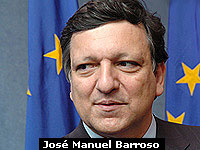
'Art and science are the legs on which Europe stands,' said President of the European Commission José Manuel Barroso in an address at Delft University of Technology on 13 January. But while the arts are flourishing in Europe according to Mr Barroso, 'the picture for science, research and technology is more mixed, and in some respects, the long-term trends are alarming'. The Commission President cited record numbers of visits to galleries, the publication of more books than ever before and the more active involvement of the creative industries in Europe's economy in order to illustrate that the arts are thriving in Europe. In contrast, the EU is not faring as well in science as its traditional and emerging competitors. 'The EU invests about a third less in research than the US. Its R&D [research and development] expenditure as a percentage of GDP is stagnating, while research investment in China grows at 20 per cent a year. There is a growing tendency of multinationals to transfer their research operations out of Europe to other countries, and increasingly to Asia,' said Mr Barroso. Add to that the fact that Europe attracts fewer researchers from other countries than the US, and that three-quarters of EU-born scientists studying for a PhD in the US say that they would prefer to stay there after graduating, and the picture looks rather gloomy for European research. The Commission is working to reverse this trend, drawing up and finalising proposals for organisations such as a European Institute of Technology and a European Research Council (ERC). The Commission is also in the process of identifying specific actions that will aid the growth of innovative European firms, particularly small and medium sized enterprises (SMEs). The application of state aid legislation and competition rules are also under review. Modernising Europe's higher education sector is also a priority, according to Mr Barroso. Obstacles include barriers between universities and between universities and enterprises, a funding gap in comparison with the US, and a lack of real autonomy among universities. The removal of barriers can only be done if 'restrictive national regulations' are removed, said the Commission President, and if confidence in degrees from other Member States is raised, along with transnational mobility among students and staff. 'EU programmes like Erasmus and Marie Curie have a positive effect here, but the fact remains that real effort is still needed from Member States and universities themselves to provide the necessary frameworks,' said Mr Barroso. Mr Barroso also noted that the growth in student enrolments has not been matched by a proportionate growth in funding. On the contrary, resources per student available to universities have declined continuously over recent decades. Criticising national systems that restrict the activities of some universities, Mr Barroso said that universities 'have not been able to - or perhaps I should say been allowed to - make up the difference from private sources'. The investment deficit affecting higher education is now so huge that closing the gap with the US would involve spending an additional 10,000 euro per student per year in Europe, said Mr Barroso. 'It is difficult to see how we are going to compete with the best in the world if steps are not taken to reduce this gap,' he added. Making the case for combining real autonomy with accountability for universities, Mr Barroso said that 'Member State governments value their universities so highly that they sometimes embrace them a little too tightly. Micro-management, the imposition of excessive uniformity: the effect can be stifling.' Instead, governments should restrict their involvement to building up and orientating the higher education sector as a whole, said Mr Barroso, leaving universities themselves to set their own priorities and programmes, to arrange their own organisational structure, to manage their own physical, financial and intellectual assets, budgets and partnerships, to recruit and pay their staff appropriately, and to target their collective efforts towards institutional priorities in research, teaching and services. The Commission President also called for the acknowledgement and rewarding of excellence at the highest level. He proposed that this is done through structured postgraduate and doctoral/postdoctoral schools. For its part, the Commission intends to boost excellence through the creation of a European Institute of Technology (EIT). 'Excellence needs flagships,' said Mr Barroso. Details for the EIT are not yet finalised, but the plan at the moment is for the EIT is 'a form of organisation performing high level education, research and innovation activities, both in some strategic thematic areas and in the field of science and innovation management'. 'To avoid reinventing the wheel, it should be based on the principle of pooling existing European resources,' added Mr Barroso. If the Spring European Council gives the go ahead to the idea, a legislative proposal is likely to be put forward this summer with a view to the EIT welcoming students for the academic year of 2009/2010. Mr Barroso closed his address by returning to the question of 'art or science'? His focus on science had not been on account of science being more important than art, but because of the shortcomings in science. 'Art and science are the legs on which Europe stands. So we would do well to make sure that the conditions are always right for both to flourish,' he said.