


Country reports detail innovation policies and challenges in each Member State
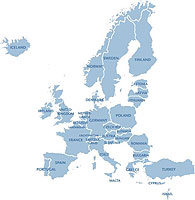
The European Commission has published reports on each EU Member State and six other European countries as part of its TrendChart on innovation. An overview of each country is provided, along with a detailed account of its innovation policies and challenges. The report on Denmark, for example, notes the country's numerous competitive strengths and few serious weaknesses. The political and institutional environment, the policy towards private enterprise, foreign investment policy, a highly developed infrastructure and institutions, a skilled labour force and a sophisticated financial sector all contribute to high levels of innovation in Denmark. In the European Innovation Scoreboard (EIS), Denmark is among the top five performers for approximately half of the indicators used. Strengths include human resources, knowledge creation and venture capital. Weaknesses are focused around the high-tech manufacturing sector, and innovation within small and medium sized enterprises (SMEs). The report highlights a number of areas for improvement. 'Danish regulations are perceived to hamper competitiveness, some actors see the tax system as skewing the economic incentive structures, and the labour market could be strengthened more,' states the report. Other challenges relate to primary education, the number of students studying science and technology, and weak collaboration between universities and companies. Far more challenges are identified in the country report on Malta. The paper notes that Malta has slipped down the Global Competitiveness Report rankings, from 19th place out of 102 in 2003 to 32nd out of 104 in 2004. To blame are increasing expectations of a recession, government expenditure deficit, a very low level of spending of research and development (R&D), poor university-industry research collaboration and inefficient government spending, according to the report. According to the EIS data for 2004, there are indications that Malta is catching up in relation to human resources, with an increase in the number of people graduating with science and engineering degrees, and an increase in the percentage of the population with a tertiary education. Low innovation levels are explained as follows: 'In the drive to reduce the budget deficit, the absence of a research and innovation culture makes public investments in research and innovation difficult to justify since the results generated, particularly the learning involved, are not immediately visible and may not render immediate and tangible results.' There is little public support for increasing research investment, although the private sector is becoming aware of the importance of such spending as a means to compete in the knowledge-based economy and is slowly emerging as a lobby, the report states.
Countries
Denmark, Malta