


Potocnik reveals rationale behind expansion of 'Science in Society' under FP7
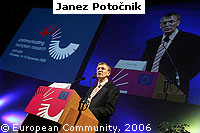
'What is the point of pumping public money into technological development if the fruits of that development are rejected by a concerned public?' asked Science and Research Commissioner Janez Potocnik on 20 January as he outlined the thinking behind an expanded 'Science in Society' priority under the Seventh Framework Programme (FP7). A recent Eurobarometer survey into public perceptions of science and technology revealed a generally high degree of optimism and interest among citizens. Many people, however, reportedly feel ill-informed, associate scientific progress with negative consequences, or harbour an underlying mistrust of scientists whose specialised knowledge they feel gives them excessive power. Addressing the Austrian Academy of Sciences in Vienna, Mr Potocnik warned his audience: 'There is no 'invisible hand' that automatically ensures new discoveries are converted into marketable technologies. The story of modern biotechnology illustrates how the economic return on R&D investments cannot be realised without public confidence.' This is one of the main reasons why the Commission has proposed a substantial expansion of 'Science in Society' under FP7, but Mr Potocnik added that a culture of explanation and consultation is democratic obligation, and that more societal debate would lead to improved EU policies and better science. 'If we get it right, it is a win-win strategy for us all!' he said. Mr Potocnik went on to outline some of the new features that the Commission intends to introduce under the Science in Society programme. Civil society groups will receive support to outsource research to universities in order to broaden the debate on key areas of public policy and explore previously unexamined problems. The Commission will also dramatically step up its efforts to communicate science to the broader public, which will mean forging closer links with the press and audio-visual media. 'Rather than be satisfied with science-related stories appearing in the second half of our popular daily newspapers, I would like to see them (at least once in a while!) on the front page,' said the Commissioner. Finally, the Commission will seek to encourage Member States to cooperate at both practical and policy level in the field of Science in Society, with 'more advanced' countries offering inspiration and an example to others. Mr Potocnik also spoke of what he called the 'human factor', and the need to encourage more young people to take up scientific subjects. 'Science in Society' will therefore promote a range of initiatives to improve science teaching in schools, and enhance the attractiveness and recognition of research as a career. The Commissioner concluded by welcoming the decision of the Austrian conference of university rectors to formally adopt the European Charter for Researchers and the code of conduct for their recruitment, and revealed that the Commission will organise an event in Vienna in June to examine further how the charter and code can be used to promote research career opportunities and jobs in Europe.
Countries
Austria