


Council endorses Biomass Action Plan
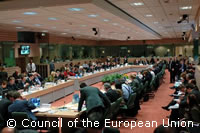
The importance of investing more in biomass research, using scientific evidence as a basis for updating animal welfare requirements, and the need for cooperation in agriculture-related research were among the issues discussed at the EU's recent Agriculture and Fisheries Council. The Council welcomed the Commission's Biomass Action Plan and its Strategy for Biofuels, agreeing that, in order to reach the EU's renewable energy target of 12 per cent by 2010, the contribution of biomass is crucial. Indeed, the Council invited the Commission to underline the importance of the specific contribution that biomass can make to energy supply when it drafts its Green Paper on energy. Agriculture ministers also endorsed the Commission's proposal to continue supporting research and development (R&D) in the domain of biofuels in the Seventh Framework Programme (FP7), the prioritisation of the 'bio-refinery' concept and second-generation biofuels by the Commission, and the development of the Biofuel Technology Platform. In other business, several delegations present at the Council emphasised the necessity of basing changes to animal welfare requirements on scientific knowledge. The majority however insisted that it is the socio-economic impact on producers and consumers that must be investigated prior to any modification of existing minimum requirements. Asked about whether new rules for species not yet covered should be drawn up and implemented in the EU, many delegates were once again resolute on the need for scientific evaluation and an assessment of socio-economic impact. Others questioned the need for new rules for species not yet covered, and a few asked that the principles of subsidiarity and proportionality be respected in the implementation of new EU rules. Seeking to promote greater cooperation in agriculture-related research, Agriculture and Rural Development Commissioner Mariann Fischer Boel was present at the Council to announce that 'Progress has been made in drawing up a common research agenda, mapping agricultural research capacities and the creation of a website.' A working paper has also been prepared in the context of FP7 on research infrastructures for the agricultural sector.