


Say 'no' for now to nuclear, watchdog advises UK government
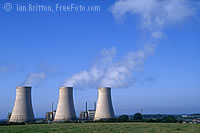
Following a year of evidence-gathering and research, the UK government's principal advisory body on sustainable development has concluded that there is no justification for a new nuclear power programme at present. Based on an analysis of eight new research papers, the Sustainable Development Commission (SDC) has advised the government that nuclear power is not the answer to tackling climate change or increasing the security of energy supplies. However, it did acknowledge nuclear power as a low carbon technology with 'an impressive safety record in the UK'. Presenting the SDC's nuclear report, part of its overall response to the current governmental energy review, Chair Jonathon Porritt said: 'It's vital that we get to grips with the complexity of nuclear power. Far too often, the debate is highly polarised, with NGOs claiming to see no advantages to nuclear at all, and the pro-nuclear lobby claiming that it's the only solution available to us. Instead of hurtling along to a pre-judged conclusion [...] we must look to the evidence.' And while the evidence suggests that nuclear could continue to generate large quantities of electricity, help stabilise carbon dioxide emissions and add to the diversity of the UK's energy supply, even a doubling of the existing capacity would lead to a cut in CO2 emissions of just eight per cent by 2035, and nothing before 2010, the SDC argues. Then there are the risks and disadvantages to consider, with the SDC report highlighting: - long-term waste, for which no solutions are yet available or acceptable to the general public, although Finland's approach was highlighted as a potential model for the UK; - cost, where the economics of developing a new generation of nuclear power plants is considered 'highly uncertain'; - inflexibility, with the UK locking itself into a centralised distribution system when opportunities for micro generation and local distribution are clearer than ever; - undermining energy efficiency, by sending signals to consumers and businesses that a technological fix is all that is required; - international security, as the UK will be unable to deny the same technology to other countries, where lower safety standards could increase the risk of accidents, proliferation and terrorist attacks. The SDC doesn't rule out further research into new nuclear technologies and the problems of radioactive waste, however, concluding that future technological developments may justify a re-examination of the issue. For now though, the SDC argues that it is possible to meet the UK's energy demands without nuclear power, through a mix of low-carbon innovation and an aggressive expansion of energy efficiency and renewables. This would help the UK to become a leader in low-carbon technologies, thus having the added benefit of enhancing economic competitiveness at the same time. 'There's little point in denying that nuclear power has benefits, but in our view, these are outweighed by serious disadvantages,' concluded Mr Porritt. 'The government is going to have to stop looking for an easy fix to our climate change and energy crises - there simply isn't one.' The UK's Nuclear Industry Association (NIA) expressed its disappointment at the conclusion reached by the SDC, but welcomed the commission's recognition of the benefits of nuclear power. NIA Chair, Philip Dewhurst, said: 'While we are disappointed that the commission has concluded that the government should not allow the replacement of the current nuclear power stations, we note the narrow 8-7 vote in the commission to rule out new nuclear, which is in many ways encouraging.' The UK Energy Minister, Malcolm Wicks, chose not to rule out the nuclear option based on the report's conclusion, stressing that: 'As the commission itself finds, this is not a black and white issue.' He added that the government will continue to assess the potential, as recommended in the report.
Countries
United Kingdom