


Research offers hope to brain cancer sufferers
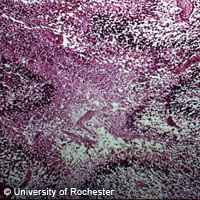
Researchers have identified a protein which blocks the growth of glioblastomas, a type of brain cancer for which there is currently no cure. The PLURIGENES project, which was partly funded by the EU's Sixth Framework Programme (FP6), is published in the latest edition of the journal Nature. There is growing evidence that stem cells are involved in the development of certain cancers, for example of the blood, breast and brain. It is thought that glioblastomas are maintained by cells which have stem cell-like properties, and as such are able to replicate themselves and make all the different cell types that make up a tumour. The differentiation of normal brain stem cells into a type of brain cell called a glial cell is controlled by bone morphogenetic proteins (BMPs). The researchers used mice to study the effect of BMPs on glioblastomas. They administered doses of BMP4 to mice which were suffering from human glioblastomas, and found that BMP4 effectively blocked tumour growth and reduced mortality. They discovered that BMP4 was not killing the stem-cell like cancer cells, but forcing them to differentiate into benign, non-cancerous cells. The findings offer hope of a new therapy for glioblastomas and other cancers which are controlled by cells with stem cell-like properties. 'The finding that in vivo delivered BMP4 blocks tumour development raises the potential of use in patients following surgery. These results support a new approach to GBM [glioblastoma] treatment - inducing differentiation of the tumour-initiating cells, rather than killing them,' the authors of the paper write. They conclude: 'The delivery of BMP4 or BMP-mimetic drugs, combined with classical therapy, may help reduce patient lethality due to GBM.'