


Research sheds new light on beetles' relationship with food plants
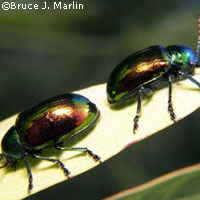
Plant-eating beetles did not evolve in parallel with their plant hosts, according to new research which goes against conventional wisdom on the matter. The work, which was partly funded by a Marie Curie grant from the EU, is published in the journal Public Library of Science One. Until now, it has been widely accepted that as plants diversified, plant-eating beetles diversified with them, with the evolutionary trees of the two groups mirroring one another. Now new research suggests that plant-eating beetles arose long after plants had arisen and diversified. Dr Jesús Gómez-Zurita, together with colleagues from the Natural History Museum in London, carried out a detailed molecular analysis of the 40,000 species strong leaf beetle family (Chrysomelidae). By analysing three sequences of DNA for over 160 types of beetle representing the major leaf beetle lineages, the researchers were able to construct a leaf beetle family tree. By looking at the differences in the DNA between the different beetle species, the researchers could calculate how long ago their lineages split. This molecular clock was calibrated using fossil data. The researchers found that the Chrysomelids did not appear until between 73 and 79 million years ago, making them several tens of millions of years younger than the flowering plants. Furthermore, their family trees do not match up, and beetle lineages feeding on the most ancient types of plants (grasses and palms) have arisen at least twice. The researchers suggest that when the leaf beetles arrived on the scene, they diversified to fill a pre-existing diverse resource, creating the picture we see today.