


Potocnik discusses EU research policy in Ireland
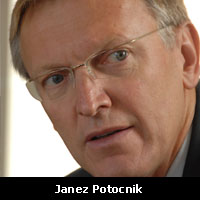
In order to provide the EU's citizens with prosperity, a sound environment and a fair society, Europe has to become a leading knowledge-based economy, EU Science and Research Commissioner Janez Potocnik told members of Ireland's National Forum on Europe (NFOE) on 27 November. Addressing the event's principal subject 'The future of Europe lies in knowledge' the Commissioner said that the only way to improve quality of life in the EU and remain globally competitive was to 'create and apply new knowledge'. 'And if we want to do that, there are three things that we have to improve: education, research and innovation.' 'You can like globalisation or you can hate it, but you can't ignore it,' Mr Potocnik emphasised. He said that the Lisbon Agenda was Europe's response to the challenges of globalisation, and went on to explain that it was part and parcel of every current EU policy: 'To use for a moment a symbol of Ireland, every policy is a string in the harp of the Lisbon Agenda. And research and innovation form the crosspiece of the Lisbon harp, to which every string is attached.' Mr Potocnik also highlighted major international challenges, such as securing adequate supplies of energy, while reducing greenhouse gas emissions: 'We need new products and processes for more efficient use of fossil fuels and the development of viable renewable energy sources. We also need reliable science on which to base sound decisions to mitigate and adapt to the environmental effects of human activities.' In response to this, the former leader of Irish Christian democrat party Fine Gael, Alan Dukes, said that it was time to make choices about the innovations needed to tackle the problem and meet EU targets for a reduction in carbon emissions. 'We need to see much more specific action in terms of getting results in the short term in order to make the longer term targets realistic.' Speakers at the debate also questioned the amalgamation of public and private research as intended, for instance, by Joint Technology Initiatives (JTIs). John Dardis of the Progressive Democrats said that in recent years, commercial interests in research had been growing - 'particularly in my own experience of agricultural research'. 'How can we tackle the problems of climate change etc, if we don't have independent research?' he asked. Other NFOE members agreed with him on the need for independent research. Responding, Commissioner Potocnik said that the Commission was striving to strike a balance. However, in terms of climate change, for example, he explained that the Commission needed to make a business case, as publicly funded projects would not work in isolation. Further issues discussed included the European Space Agency and the Galileo satellite navigation programme, which Patricia McKenna of the Irish National Platform feared might eventually be used for military purposes. 'If you look at EU arms manufacturing, it's all going to be Galileo-dependent so there is a very clear military aspect there.' Ms McKenna also said that under the Reform Treaty, control of the European Space Agency would pass to the new High Representative for foreign policy and that this might result in a militarisation of its activities. Mr Potocnik said, however, that 'not one euro' of EU research funding was spent on military research. The Irish NFOE's aim is to offer room for public debate on the EU, its enlargement, its future and Ireland's place in it. Its members come from various political parties within the Irish national parliament and the European Parliament as well as civil society organisations. Ireland has substantially increased investment in technology, innovation and scientific research in recent years and is continuing to do so: Ireland's recent 'Action Plan for Promoting Investment in research and development (R&D) to 2010' earmarks 2.5% of the country's Gross National Product (GNP) by 2010 for investment in R&D. Currently, the level is 1.4%. 'Our Action Plan sets the vision that Ireland by 2010 will be internationally renowned for the excellence of its research and be at the forefront in generating and using new knowledge for economic and social progress, within an innovation driven culture,' says Michael Martin, Irish Minister for Enterprise, Trade and Employment.
Countries
Ireland