


BioReGen project expands: greening brownfield sites with energy crops
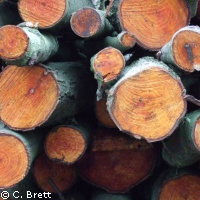
A pioneering EU-funded project, which could green thousands of acres of derelict brownfield sites in north-east England while providing climate friendly bioenergy, is set to expand following successful trials. The Clean Environment Management Centre (CLEMANCE) at the UK's University of Teesside is using energy crops to clean up old contaminated industrial sites through a process known as phytoremediation. Phytoremediation consists of depolluting contaminated soils, water or air with plants able to contain, degrade or eliminate metals, pesticides, solvents, explosives, crude oil and its derivatives, and various other contaminants, from the mediums that contain them. It is clean, efficient, inexpensive and non-environmentally disruptive, as opposed to processes that require the excavation of soil. The 'Biomass, Remediation, Regeneration' (BioReGen) project began life in 2004 with test planting at several small brownfield sites in County Durham, England. The willow trees, miscanthus, reed canary and switch grasses cleaned up the soil by absorbing contaminants such as zinc, copper, cadmium and heavy metals in coal ash. The plants break these pollutants down into harmless by-products and either incorporate them into their roots, stems and leaves or release the clean substances into the air. BioReGen believes the method can work on bigger sites and planting has now been carried out on five larger areas, each covering a hectare and all with a history of heavy industrial use. CLEMANCE believes the work, which is supported by a €1.2 million grant from the EU's LIFE-Environment research programme, has major implications for greening the industrial landscape of the past. 'When we started this project, we did not know if we could grow plants on such contaminated land but it has been a success everywhere we have tried it. We have proved that phytoremediation works and what works on a small site can also do so on much larger sites as well. It is also much cheaper than having to clean up a site or remove contaminated soils to landfill sites,' said Dr Richard Lord, CLEMANCE's Programme Leader for Contaminated Land and Water. 'Developers looking to do that spend millions of pounds per hectare, whereas our method costs only tens of thousands of pounds,' Dr Lord added. The potential of the project is described as 'huge', because there are 1,155 hectares of brownfield land in the Tees Valley alone. However, the old dirty industrial past stretches across the entire industrialised world and has transformed much of its landscape into sites that need to be cleaned up. Phytoremediation is not a quick fix, though. To get a site ready for development through this method could take years, but BioReGen thinks it is on the right track. 'We regard it as a holding operation until the sites are needed for industry again. In the meantime, we are making them attractive, and good wildlife habitats, rather than visions of unsightly dereliction which blight the image of the north-east. We are helping to create the Trees Valley,' Dr Lord said. Furthermore, CLEMANCE has been negotiating with energy provider SembCorp about providing willow to the company's recently-opened Wilton 10 biomass power station. Wilton 10 is a GBP 60 million (€83 million) biomass power station, the first of its type in the UK. It began operating this summer and is capable of producing energy for 30,000 properties by burning wood. 'Wilton 10 has a huge appetite for timber and we can help provide it, particularly if we expand our planting over larger areas. What started as a research project has found a commercial application. This is as sustainable as it gets,' concluded Dr Lord.
Countries
United Kingdom