


The risk-taking singer gets the girl
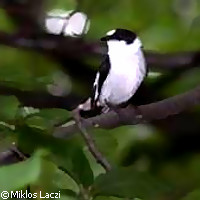
Do behavioural keys influence social interactions between animals, especially love? A group of researchers from Belgium's University of Antwerp and Hungary's Eötvös University say they do. In a study published in the open-access journal PLoS ONE, the researchers used bird song as a model to investigate whether behavioural traits involved in sexual advertisement can provide us with information on the personalities of wild animals. Researchers say that it is behavioural keys that are 'on' during social interactions which typically influence the selection of a partner for humans. How a person behaves in various social situations can tell us a lot about the personality or temperament of that person, and whether love is just round the corner. It's also clear to researchers that behavioural norms are neither culturally nor evolutionary arbitrary when they are perceived as sexually attractive. Latest developments in research show what a significant role personality traits play in various animal groups, including birds. Personality researchers usually use birds as models. Meanwhile, past studies have shown that individuals do display consistent behavioural responses on different days. Individuality can also be demonstrated in various ecological situations, such as heightened aggression when males come into contact. Sexual selection and bird song are well connected. Not only can individual birds sing different songs, but those that do have a strong personality, the researchers said. An interesting point to be made is that singing not only attracts females, but predators as well. The researchers said that there is a connection between the songs sung and the level of risk taken; the result is that select individuals sing more attractive songs. University of Antwerp's Laszlo Z. Garamszegi, along with his colleagues, targeted the link between song and personality. The research team considered that partners should develop preferences for personalities that take full advantage of reproductive output. In their study, the researchers recorded songs from two dozen European collared flycatchers and characterised many features of those songs. Behavioural tests were carried out so as to determine how birds explore in an altered breeding environment, as well as to evaluate risk taking when a predator was approaching. The study showed that male birds singing at low song posts in relation to the surrounding vegetation were more 'explorers' and risk takers. The closer to the ground, the more risk involved, the researchers said. In addition, the song selected to be sung is a factor in how successful a male bird is when 'getting' his mate. The team said being closer to the ground helps male birds form pair bonds earlier. According to the researchers, this is probably because females prefer males that sing in exposed sites. In a nutshell, prime quality individuals have a better chance of surviving in situations of exposed singing, and getting the female much more quickly.
Countries
Belgium, Hungary