


EU shines beam on single European fleet of research vessels
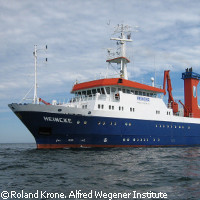
Work has begun on an EU-funded initiative to link up Europe's research vessels into a single fleet. Dubbed EUROFLEETS ('European fleets'), the 4-year project has been allocated EUR 7.2 million under the Seventh Framework Programme (FP7). In recent years, oceanographers have increased the use of satellites and floats in their investigations. Nevertheless, research vessels, submarines, and the equipment they carry remain at the front line of marine research, providing scientists with access to the sea surface, the water column and the sea floor so that they can collect samples, make observations, and service seabed observatories. Maintaining and operating research vessels accounts for up to half of the costs of marine research. Six European countries (France, Germany, the Netherlands, Norway, Spain and the UK) already coordinate the activities of their research vessels through the Ocean Facilities Exchange Group (OFEG). This allows the signatories to organise joint cruises, share equipment and exchange ship time, for example. EUROFLEETS will unite 24 marine institutes, universities, foundations and small and medium-sized enterprises (SMEs) in 16 European countries. The project is coordinated by IFREMER, the French Research Institute for Exploitation of the Sea. Together, they will define a common strategic vision for European research fleets and associated equipment (such as underwater vehicles). They will also seek to ensure that Europe's research vessels are used more efficiently, as well as promote a wider sharing of knowledge and technologies between disciplines and sectors. In addition, the project partners plan to promote a more environmentally friendly use of research vessels. A major part of the project will see the launch of calls for proposals for scientists wishing to spend time on board a research vessel. Between them, the project partners are able to offer ship time aboard 5 seafaring vessels equipped with submarine vehicles and other top-class scientific equipment, as well as 14 regional ships, which operate in 6 European eco-regions. Finally, the project aims to modernise the infrastructure of Europe's research vessels, and to develop innovative software for the acquisition and analysis of data on board, as well as interoperable devices for use on European research submarines. Speaking at the launch of EUROFLEETS in Paris, France, IFREMER's President-Director, Jean-Yves Perrot, underlined that EUROFLEETS is an illustration of the need to link up the different parts of the scientific community in order to respond to the major challenges of today and tomorrow.