


Ancient animal loos shed light on climate change
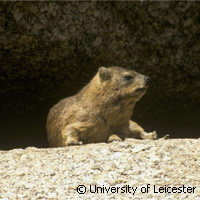
In a bid to investigate how the climate has changed over time, scientists have often turned to ice cores, lake sediments and tree rings. But now researchers from France and the UK have discovered another - albeit unusual resource - that is shedding new light on climate change, especially in drier areas: ancient animal urine. The team received a grant from the European Research Council for their study. The rock hyrax, a common species found in Africa and the Middle East that resembles a guinea pig but is actually related to the elephant, usually hangs out in areas where there are rock formations, boulders or sheer cliffs. Even more intriguing is that hyrax colonies use the same area for their toilet. The researchers from the Institut des sciences de l'évolution de Montpellier (ISEM) in France and the University of Leicester in the UK, which are part of an international group, said some of these communal toilets have been used for thousands of years. But what is so interesting about these latrines is the end product that's left on the rocks. Once the animals have taken care of business, their urine crystallises and builds up in stratified accumulations called 'middens'. The researchers used the urine deposits in the middens to investigate long-term climate change. 'In order to study past environmental changes scientists typically acquire samples from deposits laid down in bogs or lakes, within which organic matter, which can be dated is preserved,' explained Dr Andrew Carr from the Department of Geography at Leicester. 'But in dryland environments such as southern Africa this isn't possible. Fortunately it seems that hyrax urine preserves organic matter over timescales of tens of thousands of years, which provides remarkable insights into past environmental changes within the hyrax habitat.' The team from Leicester found unique organic molecules preserved in the middens, including compounds produced by the animals' metabolism and plant-derived molecules that passed through the hyraxes' digestive system. According to the researchers, the 'biomarkers' helped shed light on the types of food these herbivores consumed, and in turn the environment they lived in. So the biomarker data enabled the team to piece together the puzzle of how the region's climate has changed in the last 30,000 years, even allowing for accurate predictions of a few decades to centuries. 'Palaeoenvironmental records in this area were fragmentary,' Dr Carr said. 'The middens are providing unique terrestrial records to compare against nearby deep ocean-core records, allowing us to think in much more detail about what drives African climate change. This is a very dynamic environment, and it appears that that the region's climate changed in a complex manner during and after the last global Ice Age (around 20,000 years ago).' Dr Carr said the next step, which is part of a new study headed by ISEM's Dr Brian Chase, who also led the current study, will be to compare the midden data against simulations of past climates produced by computer-based general circulation models (GCM) in order to assess their performance and determine 'why climates have changed the way they have'. GCMs are used to simulate past and future climates. The Leverhulme Trust also provided funding for this research study, which has been presented in the journals Geology, Quaternary Research and Palaeogeography, Palaeoclimatology, Palaeoecology.
Countries
France, United Kingdom