


Please leave a message: insect's voicemail strategies
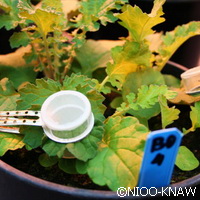
Humans are used to answering machines when trying to get in touch with friends and family when they don't answer our calls, but it seems we are not the only ones prone to leaving the odd 'voicemail' message. In a new study published in the journal Ecology Letters, Dutch scientists show that herbivorous insects use plants as 'green phones' when it comes to communicating with other bugs by leaving messages in the soil. The team uncovered this original communication method in the ragwort plant, where they found that the effects the insects have on soil fungi is a means of letting other insects know certain things. Previous research carried out by scientists at the Netherlands Institute of Ecology (NIOO-KNAW) found that insects that eat plant roots change the chemical composition of the leaves, causing the plant to release volatile signals into the air which convinces above-ground insects to select another food plant in order to avoid competition and to escape from poisonous defence compounds in the plant. Therefore it was clear that soil-dwelling and above-ground insects were capable of communicating with each other using the plant as a 'telephone'; but now, in collaboration with colleagues at Wageningen University (WUR), researchers have built on this work and proved that insects leave certain traces in the soil after they have fed on a plant. From these traces future plants growing on the same spot can pick up these signals from the soil and pass them on to other insects. These messages are really specific and the new plant can tell whether the former one was suffering from leaf-eating caterpillars or from root-eating insects. 'The new plants are actually decoding a 'voicemail' message from the past to the next generation of plant-feeding insects, and their enemies,' says lead study author Olga Kostenko from NIOO. 'The insects are re-living the past.' The researchers grew ragwort plants in a greenhouse and exposed them to leaf-eating caterpillars or root-feeding beetle larvae. They then they grew new plants in the same soil and exposed them to insects again. The team report that this message from the past strongly influences the growth and possibly the behaviour of these bugs too. Growth and palatability of new plants in the same soil mirrored the condition of the previous plant, meaning a new plant can pass down the soil 'legacy' from the past to caterpillars and their enemies. Olga Kostenko comments: 'What we discovered is that the composition of fungi in the soil changed greatly and depended on whether the insect had been feeding on roots or leaves. These changes in fungal community, in turn, affected the growth and chemistry of the next batch of plants and therefore the insects on those plants.' Now the team are working on getting to the bottom of how long these 'voicemail messages' are kept in the soil for. They also want to extend their research and find out how widespread this phenomenon is in nature.For more information, please visit:Netherlands Institute of Ecology (NIOO-KNAW):http://www.nioo.knaw.nl/en/node/12
Countries
Netherlands